
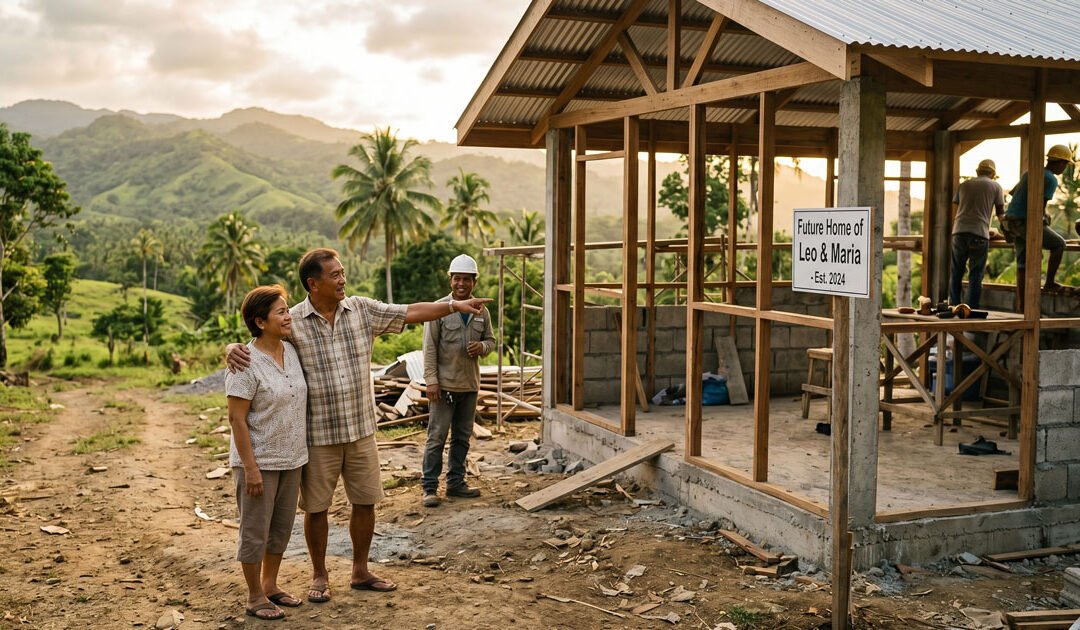
So you left. Got the green card, then the other passport, sang a different national anthem at some courthouse ceremony, and somewhere in the back of your head a small voice said: Teka, did I just give up the right to buy a lot back home?
Short answer: kind of, yes. Longer answer: there is a law for exactly this, and it is one of the more quietly generous pieces of legislation we have. It is called RA 9225, the Citizenship Retention and Re-acquisition Act of 2003, and it lets natural-born Filipinos who took up another citizenship get their Filipino one back without surrendering the foreign passport they worked so hard for.
Most explainers stop at "Yay, you can vote and carry a Philippine passport again." Fine. But if you are seriously thinking about coming home (or parking your retirement here, or buying that lot your pesky relative keep texting you about), the two things that actually move the needle are property and healthcare. That is what this post is about.
Let me walk you through both.
First, the quick version of what RA 9225 even is
Before 2003, if you naturalized abroad, the old Commonwealth Act No. 63 said you lost your Filipino citizenship. Sayonara. RA 9225 flipped that. Now, natural-born Filipinos who become citizens of another country are deemed to have retained (if you do the paperwork before naturalizing) or can re-acquire (the usual case, after the fact) their Philippine citizenship by taking an Oath of Allegiance.
The keyword is natural-born. If you were a Filipino citizen at the moment you were born, you qualify. If you got your Filipino citizenship through naturalization at some point and then lost it, RA 9225 is not your door (the Bureau of Immigration is strict about this).
You also do not have to renounce your foreign citizenship under Philippine law. Whether your other country lets you keep both is a separate question for that country's rules, not ours. (The US, Canada, and Australia generally allow it. Some do not. Check.)
Now, the good stuff.
The property angle: from “1,000 square meters, max” to “buy whatever you can afford”
Here is the part almost nobody explains clearly, so pay attention because the difference is worth millions of pesos.
If you are a former Filipino who has NOT reacquired citizenship, you are technically a foreigner. Foreigners cannot own land in the Philippines. Full stop, it is in the Constitution. What you can do is buy under two old laws written specifically for former Filipinos:
- Under Batas Pambansa 185, up to 1,000 square meters of urban land or one hectare of rural land for residential use.
- Under RA 8179, up to 5,000 square meters of urban land or three hectares of rural land for business or commercial use.
Not nothing. But it is a leash. One lot, capped, residential, and you are forever explaining your status to the Register of Deeds.
If you reacquire under RA 9225, that leash disappears. A dual citizen who has formally reacquired is treated as a Filipino, period, and enjoys the same property rights as your cousin who never left. No square-meter cap. No "residential only." You can buy a lot in Tagaytay, a rice field in Nueva Ecija, a townhouse in BGC, and a beach lot in Siargao, and the only ceiling is your bank account (and agrarian reform rules, which apply to everybody).
You do need to bring proof. When you register the property, the Register of Deeds will want to see your Certificate of Re-acquisition/Retention and your Oath of Allegiance. Keep those documents somewhere you will not lose them, because you will be presenting them more than once.
A note on condos, since everyone asks. Foreigners can already own condo units (up to the 40% foreign ownership cap per building), so if your plan was only ever a condo, you do not strictly need RA 9225 to do it. Land is the whole reason citizenship matters. If you want dirt with your name on the title, this is the move. (We did a fuller rent vs. buy breakdown with a Metro Manila condo scenario if you want the numbers on the condo side.)
The healthcare angle: yes, dual citizens can be on PhilHealth
The second big one, and the one that gets more important the older we get.
For years there was genuine confusion about whether a Filipino with dual citizenship living mostly abroad could be on PhilHealth at all. PhilHealth settled it with Circular No. 2017-0004, which formally welcomed Filipinos with Dual Citizenship (they call us "FDCs," charming) into the National Health Insurance Program.
What you get as a dual citizen member is the same package any Filipino member gets: inpatient benefits, the special benefit packages, and the Z benefit packages for the expensive, catastrophic stuff.
And here is the part that matters if you split your time between countries.You can even file for reimbursement of confinements abroad, at the full case rate.They will be payable in pesos, as long as the documents reach PhilHealth within 180 days of your discharge. It will not cover a US hospital bill in any meaningful way (case rates are case rates), but it is not nothing.
Crucially, residence abroad does not, by itself, disqualify you. The controlling factor is that you are a Filipino citizen and all the benefits that come with it.
PhilHealth does have its uses
What it costs you. PhilHealth runs on a percentage of income now. For 2026 the premium rate is 5% of your monthly income, with an income floor of ₱10,000 and a ceiling of ₱100,000. In plain terms:
- Declare the minimum and you pay ₱500 a month (₱6,000 a year).
- Hit the ceiling and you pay ₱5,000 a month (₱60,000 a year), and that is the most anyone pays no matter how rich.
As a returning retiree or someone without a local employer, you would enroll as a direct contributor and shoulder the full amount yourself (no employer to split it with). Still, ₱6,000 a year for a baseline safety net is the kind of number that makes you go sige na nga.
And if you are 60 or older, it gets better. Senior citizens who are Filipino citizens are automatic PhilHealth members with premiums shouldered by the government. Dual citizens count. So a 65-year-old balikbayan who reacquires citizenship and registers does not pay premiums and is still covered. If you happened to have logged at least 120 monthly contributions during your working years here, you may even qualify as a lifetime member, fully covered with no further payments.
So the healthcare math for a returning senior is roughly: reacquire, register, pay nothing, get covered. Try getting that deal from a private HMO at 65.
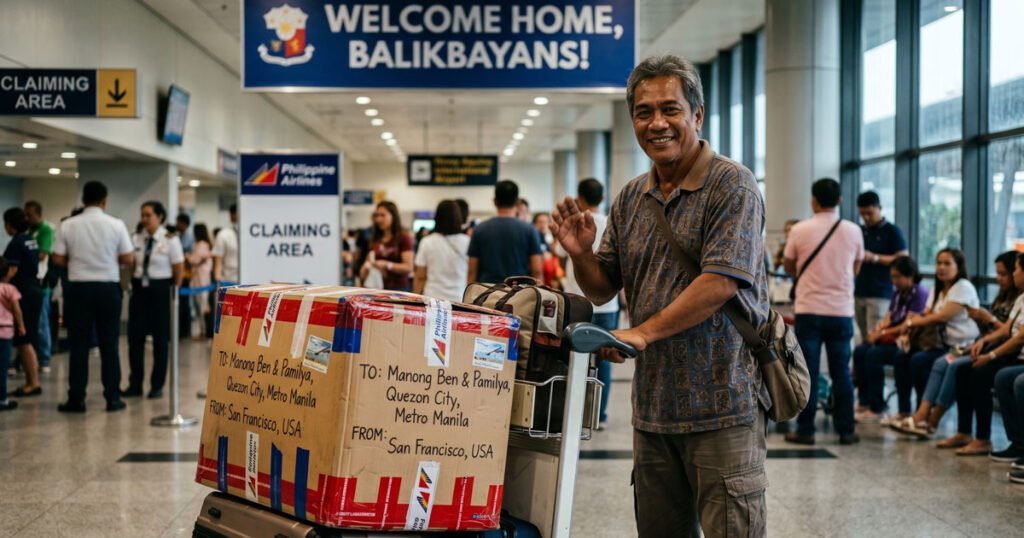
What the whole thing actually costs and how long it takes
Let me set expectations, because Filipino bureaucracy is its own genre.
If you are abroad, you file the petition and take your Oath of Allegiance at the nearest Philippine Embassy or Consulate. The processing fee runs about US$50 for the principal applicant, plus roughly US$25 per minor child you include. You will need your PSA birth certificate (proof of natural-born status), your foreign passport, photos, and the petition form.
If you are already in the Philippines, you file with the Bureau of Immigration instead, which has its own fee schedule and the extra step of canceling your Alien Certificate of Registration if you have one.
Either way, the output is the same paper trail: your Oath of Allegiance, an Order of Approval, and most importantly your Identification Certificate (IC). That IC is the document that proves you are Filipino again. Guard it like a land title, because for the property registration above, it basically is one.
Timeline varies wildly by post. Some consulates do same-week oath-taking; others batch ceremonies monthly. Plan for weeks, not days.
A quick worked example
Say Tito Boy and Tita Baby, both natural-born, both naturalized in California, both 63, want to retire to a 600-square-meter lot in Batangas and build a small house. Lot is ₱4.5 million.
Without RA 9225: As foreigners, they cannot own the land at all. Their options are buying under the BP 185 cap (squeaks in at 600 sqm, but they are now flagged foreigners on the title with the residential restriction baked in), leasing long-term, or putting the title under a relative's name (the classic dumb idea that ends families). Healthcare? Private insurance, which for two 63-year-olds is brutal.
With RA 9225: They each pay about US$50 to reacquire (call it ₱6,000 total for the couple). They own the lot outright, clean title, no caps, no asterisks. Both register with PhilHealth, and because they are over 60, the government covers their premiums. Net new annual cost for the safety net: ₱0.
The ₱6,000 one-time spend versus a lifetime of clean ownership and free senior PhilHealth coverage is not a close call. It is one of the highest-return ₱6,000 you will ever spend.
The fine print, because there is always fine print
A few honest caveats so you do not @ me later:
- Public office and some professions. If you want to run for office or take certain government posts, you will be required to make a personal renunciation of your foreign citizenship. Reacquiring is not the same as renouncing. For most balikbayans this never comes up, but know it exists.
- Taxes. Becoming a Filipino again has tax implications, especially if you stay long enough to be a tax resident, and the RP-US tax treaty and your home country's rules (looking at you, US citizenship-based taxation) interact in ways that deserve a real accountant. I am a blogger, not your CPA. Talk to one.
- Documents go stale and rules get tweaked. Always confirm the current fee and document checklist directly with your specific consulate or the BI before you book anything. Posts differ.
The bottom line
RA 9225 is not really about getting your crummy old passport. What you actually get is that you stop being a foreigner in your own country: you can own land with your name on the title and no square-meter limit, and you can plug into PhilHealth like everyone else, free if you are a senior.
For the balikbayan weighing whether coming home is even financially sane, that combination quietly removes two of the biggest objections. The lot is yours. The hospital stay will not be 100% out of pocket (at least that is the idea). The rest is just deciding which province has the best chicken recipe.
Thinking about the wider move? You may want to read our long-stay visa comparison to see why dual citizenship beats every visa route on this list, and our healthcare costs in the Philippines piece for what PhilHealth actually covers once you are in.