
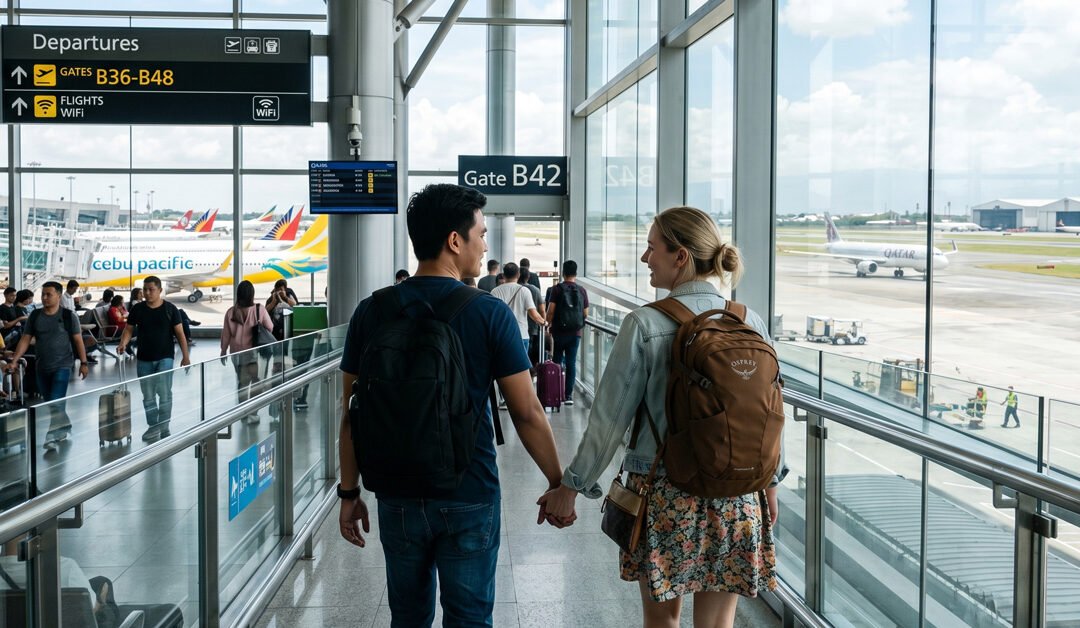
Considering how the amount of crap that's been going on in the country, not everyone hates the Philippines. We still have OFWs, balikbayans, and foreigners (often married to Filipinos or plan to) who are seriously looking to spend their twilight years on our shores.
The required long-term stay visas really depends on the situation. Returning OFWs bringing a foreign spouse home. Former Filipinos who gave up the passport for an Australian or Canadian one and now regret it a little. Actual foreigners who fell in love with a beach in Siargao and a person in Cebu, not necessarily in that order. Or a foreigner assigned in Manila. (Yes. That's what AFAM means, people.) And the question is always the same, even if the situations are not.
So here is the honest, no-agent-commission version. There are basically four ways to plant yourself in the Philippines for the long haul. None of them is "best." The right one depends entirely on who you are, who you married, and how much money you are willing to park in a bank you cannot touch.
Let me walk you through all four.
The four paths at a glance
Before we go deep, here is the lay of the land. Think of these as four lanes on the same highway, each with its own toll booth. You choose what fits your situation.
| Path | Who it's for | Deposit needed | Roughly how long | Lets you work? |
|---|---|---|---|---|
| Tourist visa (9A / visa-free) | Anyone, short to medium term | None | Up to 36 months, then you must leave | No |
| Balikbayan privilege | Former Filipinos + their foreign spouse/kids | None | 1 year per entry, repeatable | No |
| SRRV | Retirees and semi-retirees, 40+ | US$1,500 to $50,000 | Indefinite | Yes, with a permit |
| 13A marriage visa | Foreigners married to a Filipino citizen | None | Indefinite | Yes, no permit needed |
Now the details, because the devil here lives in the fine print and the fine print is where people get blacklisted.
Path 1: The tourist visa, also known as “winging it”
This is where almost everyone starts, often without realizing it is even a decision.
If you hold a passport from one of the countries under Executive Order 408, which covers most of the US, UK, Canada, Australia, EU, and a long list of others, you can walk off the plane and get 30 days visa-free. No application, no fee, just a stamp. For a lot of people doing a long vacation or a "let's see if I even like it here" trip, that is plenty.
Want more? You extend. The first extension adds 29 days to bring you to 59 days total, and after that you keep renewing in one-month, two-month, or six-month chunks at any Bureau of Immigration office. Visa-free nationals can stack these extensions all the way up to 36 months of continuous stay. Visa-required nationals (think Indian and Chinese passport holders, among others) are capped at 24 months. The rules on accumulated stay are laid out by the BI and various DFA posts.
A few things people forget until they are at the airport:
- Past 59 days, the ACR I-Card is mandatory. That is the Alien Certificate of Registration Identity Card, a microchipped ID that costs around ₱3,500 and proves you are a legally registered alien. No card, expect a fine.
- Cross a January while you are here and you owe an Annual Report (around ₱310) at the BI.
- Stay six months or more and you need an Exit Clearance Certificate (ECC) before you can fly out, roughly ₱1,620.
- Hit the 36-month cap and you are out. You have to leave the country. A quick hop to Hong Kong or Singapore, and you can come back to start a fresh cycle. Re-entry is always at the officer's discretion, so do not treat it as automatic.
The catch with the tourist route is that the fees nickel-and-dime you to death. Stacking monthly extensions for a year can run you ₱15,000 to ₱20,000 or more once you add the ACR I-Card and express-lane charges. The six-month Long-Stay Visitor Visa Extension (LSVVE) at around ₱11,500 is the smarter move if you are committed to staying four months or longer, since it bundles the ACR card and saves you the repeat trips to BI.
Bottom line: Great for testing the waters or for stays under a year. Terrible as a permanent strategy. You are paying rent on your legal status forever and never building anything.

Path 2: The Balikbayan privilege, the best-kept secret for mixed families
This one is grossly underused. And, it is free.
Under Republic Act 6768, the Balikbayan Program lets former Filipino citizens, and any OFW, bring their foreign spouse and unmarried children into the country for a full one year visa-free, granted on arrival. No deposit, no application fee, no agent. The Department of Tourism set this up specifically to make coming home easier. Around 392,000 overseas Filipinos used national arrival channels in just the first nine months of 2025, so this is not some obscure loophole.
Here is exactly how most foreign spouses qualify. The rules are strict but simple:
- They must travel together. The foreign spouse or child has to enter the Philippines with the balikbayan, same flight, same arrival. Show up separately and the privilege evaporates.
- The foreign family member must be a national of a visa-free country under EO 408. Most Western passports qualify.
- Bring the paper. Per the official DFA guidelines, foreign spouses need a PSA marriage certificate, children need a birth certificate showing a Filipino parent, and former Filipinos should carry an old Philippine passport or PSA birth certificate as proof.
And take note, because people get this wrong all the time: the privilege covers spouse and children only. Parents, grandparents, grandchildren, and in-laws are not eligible. Sorry, hindi pwedeng isabay ang biyenan.
One more 2026 wrinkle: everyone now has to register on the e-Travel portal within 72 hours before arrival and present the QR code. No exceptions, balikbayan or not.
After the one year is up, you can extend in two-month increments for up to another year, or you simply fly out and fly back in together to reset the whole thing. For a couple that travels back to, say, Canada, once a year anyway to see the grandkids, this is essentially free residency with a built-in annual vacation.
Bottom line: If you are a former Filipino or an OFW with a foreign spouse, start here. It costs nothing and asks for nothing except that you arrive holding hands.
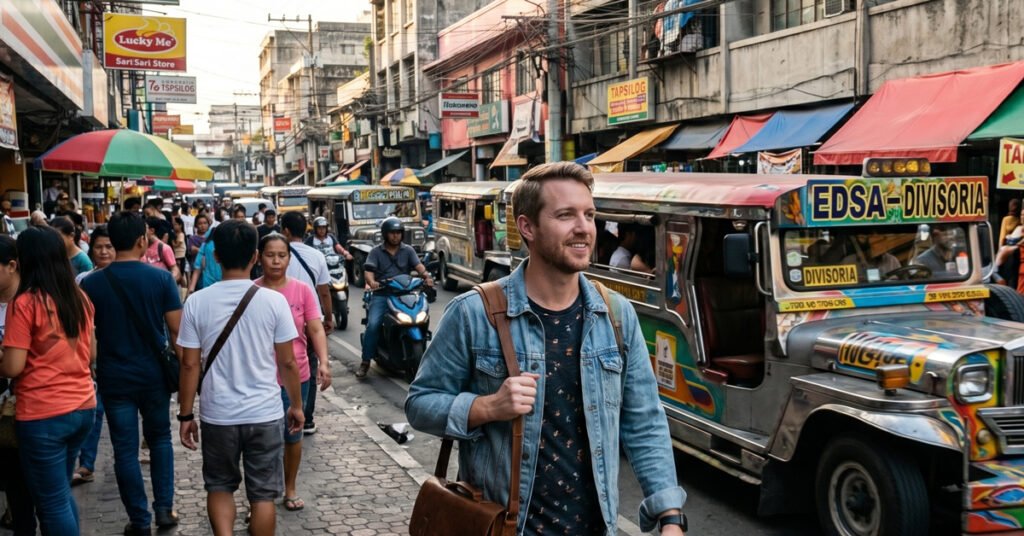
Path 3: The SRRV, or “set it and forget it” for retirees
This is the one everyone has heard of, and the one that changed the most recently, so throw out whatever you read before 2025.
The Special Resident Retiree's Visa is run by the Philippine Retirement Authority (PRA) and gives you indefinite residency with multiple-entry privileges. As of the Expanded SRRV Program that took effect September 1, 2025, the rules got a serious overhaul, and the official PRA guidelines are worth reading in full before you commit a centavo.
The headline change: the minimum age dropped from 50 to 40. That opens the door to early retirees, FIRE (financial independence, retire early) types, and remote workers who want a stable base without the annual tourist-visa grind. (POGO operators and workers, though, are now explicitly disqualified.)
The deposit you park in a PRA-accredited bank depends on your age and whether you have a lifetime pension. Here are the current figures straight from the PRA:
| SRRV Classic | Age 40 to 49 | Age 50 and above |
|---|---|---|
| With pension (US$800/mo single, $1,000/mo with family) | US$25,000 | US$15,000 |
| Without pension | US$50,000 | US$30,000 |
At roughly ₱61 to the dollar (exchange rate was about ₱61.35 in mid-June 2026), that means a 55-year-old pensioner is looking at a ₱915,000 deposit, while a 45-year-old without a pension needs to wire in a hefty ₱3.05 million. The deposit is refundable when you surrender the visa, and under SRRV Classic it can later be converted into a condo purchase or a long-term lease, subject to PRA conditions.
There is also an SRRV Courtesy option with a deposit as low as US$1,500, but do not get excited unless you fit the box. It is reserved for former Filipinos and for a narrow set of foreign nationals: retired diplomats, retired officers of recognized international organizations (UN, ADB, World Bank, and the like), retired military who served the Philippines under a defense treaty, and high achievers or philanthropists. Your average foreign retiree does not qualify for this tier.
On top of the deposit you pay a one-time US$1,500 processing fee (plus US$300 per dependent) and a US$360 annual fee for Classic that covers you and up to two dependents. Processing takes 30 to 45 working days, and you have to be physically in the country the whole time.
The perks are genuinely nice, and this is what sells it:
- No annual BI report and no exit clearance. You come and go freely.
- No ACR I-Card. You get a PRA ID instead.
- You can work with the right permit.
- Foreign pension income is generally exempt from Philippine income tax.
Bottom line: The SRRV is the cleanest, most hands-off option, and the only one on this list that does not depend on either your passport history or your marital status. The price of that convenience is a big chunk of capital sitting in a Philippine bank. If you have the cash and you value never thinking about your visa again, it is hard to beat.
Path 4: The 13A marriage visa, the long game for couples
If you are a foreigner legally married to a Filipino citizen, this is almost always your move, and it does not cost you a deposit.
The 13A, formally the Non-Quota Immigrant Visa by Marriage under Commonwealth Act 613, grants indefinite residency for as long as the marriage is valid. It comes in two stages, and this trips people up:
- Probationary 13A: valid for one year. The BI uses this window to confirm the marriage is genuine.
- Permanent 13A: you apply to convert before the probationary visa expires, ideally three to four months ahead. Once granted, it does not expire.
To qualify, the eligibility rules are straightforward but firm: a valid marriage registered with the PSA, a Filipino spouse who actually resides in the Philippines (not abroad), a clean criminal record proven by NBI and home-country police clearance, a clean bill of health, and citizenship of a country that has diplomatic relations with the Philippines. Your Filipino spouse petitions on your behalf, and while it processes (two to three months) you sit on a tourist visa.
What you get is substantial:
- You can work without an Alien Employment Permit. Big deal if you plan to earn here.
- Indefinite stay, easier bank account opening, access to loans, a TIN.
- It is far cheaper than the SRRV. Total fees run roughly ₱20,000 to ₱50,000, no six- or seven-figure deposit.
The trade-offs: you do get an ACR I-Card and you do owe the annual report, so it is not quite as fuss-free as the SRRV. And your status is tied to the marriage. If the marriage ends, so does your basis for staying.
Bottom line: Married to a Filipino and planning to stay for good? The 13A is the obvious, affordable answer. The only reason to skip it for the SRRV is if you would rather your residency stand on its own two feet, independent of the relationship.
So which lane do you actually take?
Let me make this concrete, the way I eventually broke it down for Tito Boy.
- You are just exploring, less than a year. Tourist visa. Get the LSVVE if you cross the four-month mark. Do not overthink it.
- You are a former Filipino, or an OFW, with a foreign spouse. Balikbayan privilege, every single time. It is free and it is built for you. Just remember to fly in together.
- You are a foreigner married to a Filipino, here for the long haul. 13A. Cheaper than the SRRV, lets you work, and grows into permanent residency.
- You are a retiree or semi-retiree, single or married to a non-Filipino, with capital to park. SRRV. Especially attractive now that the age floor is 40 and your pension income stays untaxed.
A reality check for everyone, regardless of lane: none of these visas lets a foreigner own land. The Philippine Constitution forbids it, full stop, no matter how permanent your residency. You can own a condominium unit (up to the 40 percent foreign cap in a building) or take a long-term lease, but the lot your dream beach house sits on will be in a Filipino name. Plan your money accordingly, and never, ever buy land under a "dummy" arrangement. That is a fast track to losing both the property and your visa.
The other reality check is timing and paper. Apostilled documents, PSA certificates, NBI clearances, medical exams: every one of these has a shelf life, and the single most common, most avoidable mistake is letting your current status lapse while you wait for the next one. Mark your calendar. Set reminders. The BI does not accept "I forgot" as a defense, and an overstay fine plus a possible blacklist is a brutal way to end a love story.
Tito Boy, for the record, went Balikbayan. Free, easy, and his wife now spends her mornings haggling at the Mahogany Market like she was born there. Sometimes the best financial decision is the one that costs nothing.
Frequently asked questions
How much is the SRRV deposit in 2026? Under the Expanded SRRV Program, the SRRV Classic deposit ranges from US$15,000 (pensioner, age 50+) to US$50,000 (non-pensioner, age 40 to 49). A limited SRRV Courtesy tier sits at US$1,500 but is restricted to former Filipinos and specific categories like retired diplomats and military. The deposit is refundable when you surrender the visa.
Can a foreigner stay in the Philippines for a full year without a long-stay visa? Yes, in two ways. A foreign spouse or child of a former Filipino or OFW can get a one-year visa-free stay under the Balikbayan privilege if they arrive together. And any visa-free tourist can extend a 9A tourist visa up to 36 months of continuous stay (24 months for visa-required nationals).
What is the cheapest long-stay option for a foreign spouse of a Filipino? If your spouse is a former Filipino or OFW, the Balikbayan privilege is free. If your spouse is a current Filipino citizen, the 13A marriage visa is the cheapest permanent route, with total fees around ₱20,000 to ₱50,000 and no deposit.
SRRV vs 13A, which is better? The 13A is cheaper and lets you work without a permit, but it depends on staying married. The SRRV costs a large refundable deposit but stands on its own, exempts your foreign pension from tax, and frees you from the ACR I-Card and annual report. Choose the 13A if you are married to a Filipino and want to save money; choose the SRRV if you want residency independent of any relationship.
Do I need a visa to retire in the Philippines? Not strictly. You can technically live on rolling tourist-visa extensions for up to three years, but it is expensive and resets to zero when you hit the cap. For a genuine retirement, the SRRV (if you have capital) or the 13A (if you are married to a Filipino) gives you stable, indefinite residency.
Can a foreigner own land in the Philippines on any of these visas? No. No residency visa grants land ownership to foreigners. You may own a condominium unit or hold a long-term lease, but land must be owned by a Filipino citizen.