

"Bawal magkasakit" might seem like a joke to many Filipinos but it just reflects the dire situation most of us are in. Getting sick is forbidden - not because your nanay will scold you for not wearing a tsinelas on cold tiles (she will), but because your bank account legally cannot afford it.
If you've ever stared at a hospital "Statement of Account" and felt your soul briefly leave your body, congratulations: you've experienced the most authentically Filipino financial milestone there is. Let's break down what getting sick actually costs here with real numbers, real receipts, and a healthy amount of side-eye at the people who are supposed to be fixing this.
This topic actually hits close to home. One of my dear friends with whom I used to discuss this notion of just being "Saktong Burgis," succumbed to an acute illness. Her treatment and hospitalization drained them financially. She passed away not reaching the dream.
First, the big scary number
In 2024, Filipinos collectively spent ₱1.56 trillion on health care which is a 17 percent jump from the year before, according to data from the Philippine Statistics Authority. That works out to roughly ₱12,751 per person, for those of us keeping score at home (and crying).
Here's the part that should make you put down your kape: of all that money, ₱615.16 billion came straight out of household pockets representing about 42.7 percent of current health spending, per the PSA's Philippine National Health Accounts. That's an 11.8 percent increase in a single year, growing faster than what households spend on, you know, actually living.
For context, the World Bank tracks this metric across countries, and the Philippines consistently sits at the painful end of the scale. "Out-of-pocket" is just the polite economist term for "money you personally fork over at the cashier while sweating." Almost half of every healthcare peso in this country is paid this way. Take note that this is not by insurance, not by government, but by Juan and Juana dela Cruz holding their breath.
What sickness actually costs: a tour of the menu nobody wants to order from
Abstract trillions are hard to feel. Specific bills, on the other hand, hit like a jeepney with bad brakes. Here's the going rate for some greatest hits:
- A single hemodialysis session: ₱2,500 to ₱5,000 or more in private centers, according to PinoyMedical's price tracking. Patients with stage 5 kidney disease need this three times a week, for life. Do the math and you'll understand why kidney disease is a financial death sentence as much as a medical one.
- A full year of dialysis: PhilHealth now covers up to 156 sessions at ₱6,350 each which is about ₱990,600 per patient annually, according to the agency's own figures. Helpful! But that coverage arrived only recently, and providers are still allowed to charge extra for anything above "minimum standards of care," which is a delightfully elastic phrase.
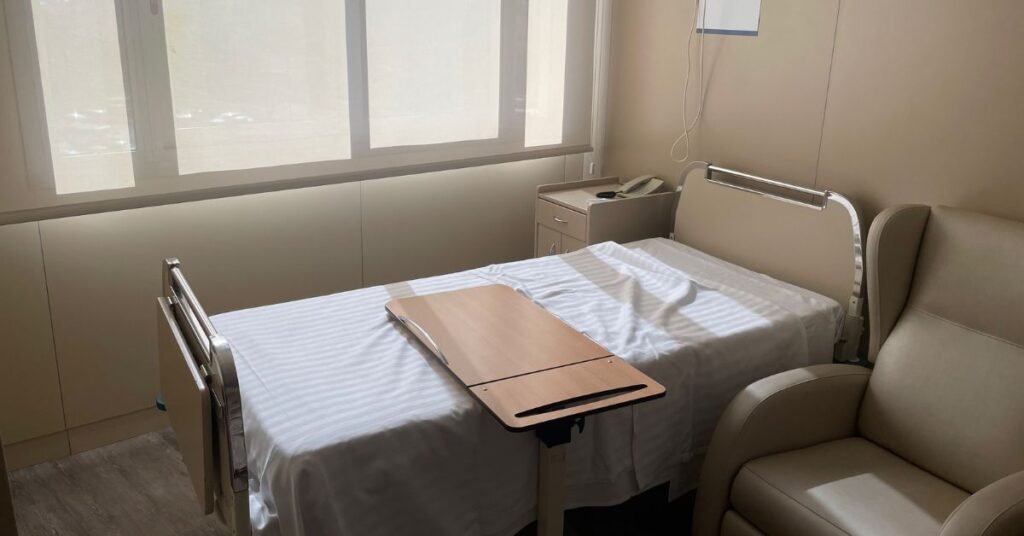
- Hospital confinement: Even a "routine" few-day admission for dengue, pneumonia, or appendicitis routinely runs into the tens of thousands of pesos once you tally room fees, labs, medicines, and the mysterious "miscellaneous" line item that seems to bill you for the privilege of breathing hospital air.
- Medicines: Researchers have long found that drugs are the single biggest driver of health spending — accounting for as much as three-quarters of health costs among the poor. Nothing says "universal health care" like rationing your maintenance meds until payday.
The “Four Ps” of Filipino health financing (and none of them are the cash transfer)
Ateneo and PIDS researchers came up with a grimly perfect summary of how ordinary Filipinos actually pay for illness, captured in their research. They call it the four Ps:
- Pagtitiis - Enduring the symptoms and praying it goes away on its own.
- Pangungutang - Borrowing money, often from informal lenders at terrifying interest.
- Pagmamakaawa - Appealing to relatives, politicians, and the kindness of strangers on Facebook.
- PhilHealth - The one that's supposed to be a safety net but often functions like a trampoline with a few key springs missing.
If your national healthcare strategy can be summarized by a poem about begging, that's not a vibe. That's a policy failure.
“Only one hospital bill away from poverty”
This isn't hyperbole; it's the literal finding of economists. A study by the Philippine Institute for Development Studies found that even as government health spending nearly doubled over the past decade, out-of-pocket costs also rose by 1.6 times. More government money went in; ordinary families' burden went up anyway. That is the fiscal equivalent of pouring water into a bucket and somehow getting thirstier.
The same research found that in 2023 alone, about 1.2 million households faced "catastrophic" health spending, meaning medical bills ate up more than 40 percent of what they could possibly afford to pay. Historically, out-of-pocket health costs have pushed well over a million Filipinos into outright poverty in a single year. The Philippines also scored just 58 on the UHC service coverage index, a full 10 points below the global average of 68.
As the saying goes — and as the data brutally confirms — Filipinos are only one hospital bill away from poverty.
The government had ONE job
Here's where we put down the jokes for a second, because this is the part that should make every contribution-paying Filipino genuinely angry.
In 2024, while families were borrowing money and rationing medicine, the Department of Finance ordered PhilHealth to hand over ₱89.9 billion of its "excess" funds to the national treasury. That's money to be spent on unprogrammed appropriations (translation: a slush pile that critics have called a new vehicle for pork-barrel-style spending). PhilHealth actually remitted ₱60 billion of it before the courts stepped in.
Read that again. The agency in charge of insuring sick Filipinos was sitting on tens of billions of pesos it could have used to lower your bills, and instead of, say, lowering your bills, the government decided that money looked better in the treasury.
Then, for good measure, lawmakers allocated zero peso in subsidies to PhilHealth in the 2025 budget, and slashed ₱31.2 billion from the Department of Health's program for indigent patients, as the Inquirer reported. The poorest, sickest Filipinos got the biggest cut. Bold strategy.
There might be some hope for justice
The good news, and the rare plot twist where the system works, is that in December 2025, the Supreme Court unanimously ruled the transfer illegal. The Court ordered the ₱60 billion returned to PhilHealth and permanently barred the remaining ₱29.9 billion from being touched, calling the move "grave abuse of discretion" and a violation of the Universal Health Care Act.
The justices flatly rejected the government's claim that the funds were "idle," noting that the money was already legally earmarked to improve benefits and lower your contributions.
For a deeper, less rage-inducing breakdown of how this whole mess happened, The Diplomat has a solid explainer on the PhilHealth case.
The takeaway is uncomfortable: the funding existed. The law requiring it to be spent on your health existed. What was missing was the will to actually use it on you. As one analysis bluntly put it, the country has been spending more on health and getting less, which is what happens when the people in charge treat a health fund like a piggy bank instead of a lifeline.
So what do you actually do about it?
Until the system stops treating "getting sick" as a personal moral failing, here's the unglamorous survival kit:
- Update your PhilHealth membership and know your benefits. The coverage is imperfect, but the dialysis and primary-care packages are real money you've already paid for. Use them.
- Consider HMO or private health insurance early, ideally while you're young and the premiums are cheap and the underwriters still like you.
- Build a dedicated health emergency fund separate from your regular savings — even a small monthly amount beats raiding your future at 5-6-style interest rates.
- Keep your records. Receipts, prescriptions, and discharge summaries are what stand between you and a denied claim.
- Vote like your hospital bill depends on it — because, as the budget cuts above demonstrate with depressing clarity, it absolutely does.
The cost of getting sick in the Philippines will probably never be cheap. But it shouldn't be a one-way ticket to bankruptcy, and the fact that it so often is isn't bad luck — it's the predictable result of choices made by people who could choose otherwise. The Supreme Court just reminded everyone of that. Now we get to see if anyone in power was taking notes.
This article is for general information and isn't financial or medical advice — for your specific situation, talk to a licensed professional. Figures are based on the most recent publicly available data as of mid-2026 and may change.