
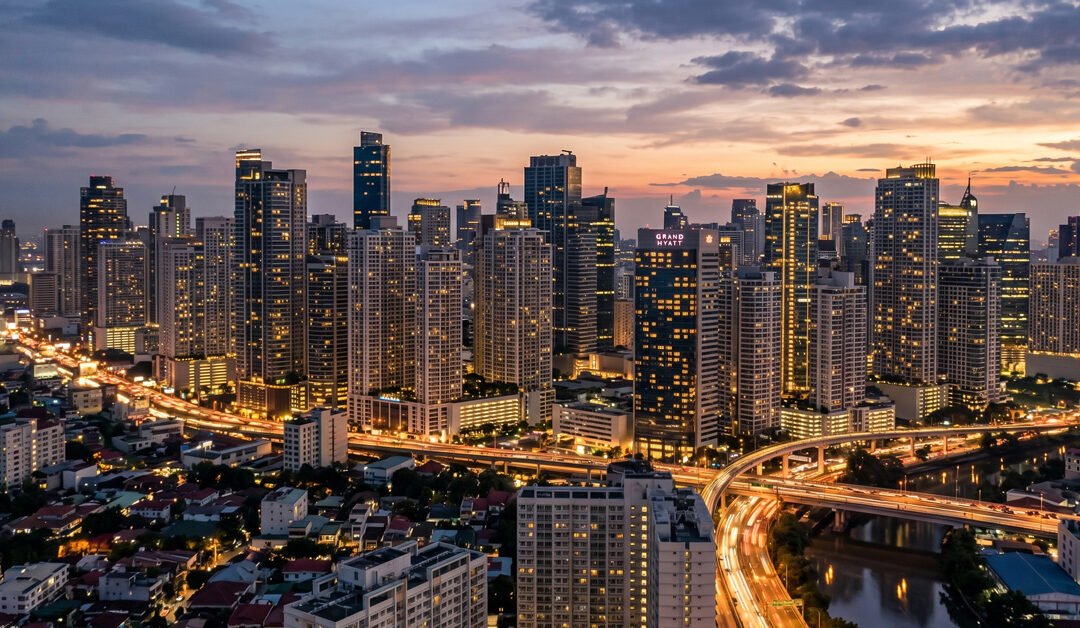
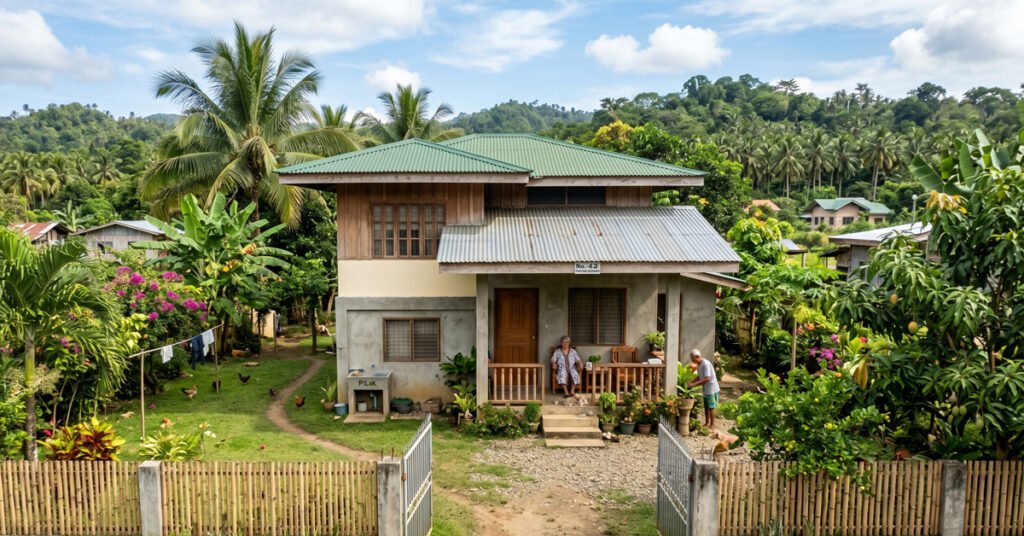
There's an age-old advise from older folk regarding this topic: "Sayang ang upa. Wala kang maiiwan." Rent is a waste. You won't be able to leave anything behind. For their generation, owning the lot you stood on was not an investment thesis. It was not only proof that you made it, the property is heritage.
But a lot of these folksy wisdom get challenge in today's world of social media, AI, and drone. We might want to run the numbers, because in 2026, "renting is throwing money away" is the most expensive folk wisdom in Philippine personal finance.
Let me show you the actual math. No emotions, no bravado, just pesos.
The myth we were all raised on
The myth goes like this. The renter hands over P25,000 every month, sees none of it again, and after ten years has spent more than P3 million on, essentially, the privilege of someone else's roof. The buyer pays roughly the same amount, except theirs turns into equity, into something with their name on the title. One person builds wealth. The other builds their landlord's wealth.
But let's dive into the math to see if this actually holds up.
Let’s do the actual math
Here is a realistic mid-market scenario, the kind of unit an actual comfortable-but-not-rich Filipino family would be looking at.
A 1-bedroom condo in a decent Metro Manila location, around 35 square meters, sells for around P5 million. The comparable unit down the hall rents for about P25,000 a month. That is right in the range where a typical Manila one-bedroom sits in 2026 (the range runs from around P25,000 in older buildings to P60,000 in BGC).
If you buy:
- Down payment at 20 percent: P1,000,000
- Loan amount: P4,000,000
- At a current bank rate of around 7 percent over 20 years, your monthly amortization is about P31,000. (Pag-IBIG's standard housing loan rates for 2026 run from roughly 5.875 percent to 9.75 percent depending on your repricing period, so 7 percent is a fair middle.)
- Over the full 20 years, you will pay around a total P7.4 million on that P4 million loan. Read that again. The interest alone is roughly P3.4 million. That is a second condo's worth of money that goes to the bank and turns into nothing you can sell.
And the amortization is not the end of it. Add the condo dues (around P100 per square meter, so about P3,500 a month for our unit), the real property tax (Metro Manila applies around 3 percent of assessed value annually), plus the occasional special assessment when the building decides the building needs a new paint job or new treadmills for the gym.
So the honest monthly outlay for the owner is not P31,000. It is closer to P36,000, against the renter's P25,000.
The down payment is not the whole down payment
Here is the first item nobody mentions.
When you buy, you do not just lose the P1 million down payment to illiquidity. You also pay closing costs, and these are brutal in the Philippines. Documentary stamp tax of 1.5 percent, transfer tax of 0.5 to 0.75 percent, registration fees, notarial fees, and so on. Industry guides put total transaction costs at anywhere from 8 to 12 percent of the price, and Wise pegs the all-in figure at 9 to 10 percent.
On a P5 million unit, that is P400,000 to P600,000. Money that buys you exactly zero additional square meters. So before you have spent a single peso on the actual mortgage, buying has already cost you around P1.45 million in down payment plus closing costs.
The part nobody computes: opportunity cost
Now the item that quietly decides the whole argument.
That P1.45 million does not have to sit in concrete. The renter keeps it. And in 2026, a boringly diversified Filipino portfolio (Pag-IBIG MP2, a REIT or two, a balanced fund) realistically earns 6 to 8 percent a year.
Park P1.45 million at a modest 6.5 percent and leave it alone for ten years. It becomes about P2.72 million. That is roughly P1.27 million of gains the renter pockets purely for not buying.
Meanwhile, let's tally the same ten years honestly for both sides:
- The renter pays about P3.44 million in rent over a decade (assuming a 3 percent annual increase, which tracks the modest 2 to 4 percent rent growth forecast for Manila). But they are also holding that P2.72 million investment.
- The owner pays about P3.72 million in amortization plus another P620,000 in dues and property tax, on top of the P1.45 million already sunk at the start. After ten years they have built roughly P1.33 million in equity from principal payments, and they still owe the bank about P2.67 million.
Notice what just happened. The owner's "asset" is mostly still the bank's asset. Of every early amortization peso, a big chunk goes to paying the interest, not equity. The renter who invested the difference may not be actually poorer. In a lot of scenarios, they are ahead and a lot more liquid.
The elephant in the room
There is one more thing that makes the buy-side math worse than it used to be, and it is specific to right now.
Metro Manila is sitting on a condominium glut. As of late 2025, there were around 30,400 unsold units in the metro, roughly eight years of inventory. Secondary-market vacancy hit 24.7 percent at the end of 2025 and is projected to climb toward 25.6 percent in 2026. One in four units in resale buildings, empty.
What does oversupply do? It flattens both rents and prices. Rental yields that were 5 to 10 percent back in 2015 have compressed to about 2 to 4 percent today, and that is before condo dues and vacancy eat into it. The entire "my condo will appreciate" engine that makes buying work is, for mid-market Metro Manila units, running on fumes for the foreseeable future.
If your P5 million condo grows to P6.5 million in ten years, buying looks smart. If it just limps to P5.5 million, your "gains" barely cover the interest you paid. And in an oversupplied market, "limps" is the base case, not the disaster case.
When buying actually wins
I am not here to tell you to rent forever. Buying genuinely wins in specific situations, and you should know which ones apply to you.
You qualify for the 4PH subsidized rate. This changes everything. The government's Expanded Pambansang Pabahay para sa Pilipino program holds the rate at 3 percent for qualified socialized-housing borrowers. Run our P4 million loan at 3 percent instead of 7 and the monthly amortization drops to about P22,000, with total interest of only P1.3 million instead of P3.4 million. That is a P2 million swing. At 3 percent, the math flips hard in favor of buying. First-time buyers earning under P47,856 a month in NCR (or P34,686 outside it) may qualify, and all OFWs are eligible. If you can get this rate, get it.
You are looking at a house and lot, not a condo. Land does not get oversupplied. You cannot print more of it. Houses in land-scarce Metro Manila neighborhoods are appreciating 7 to 10 percent a year, while mid-market condos crawl, and sometimes, even lose out. The provincial corridors (think the growth belts in Cavite, Laguna, Bulacan, Pampanga) are where a lot of comfortable repatriating families are quietly winning, getting more space and a real appreciating asset for the price of a shoebox in the metro.
You will stay put for a long time. Transaction costs of 8 to 12 percent only amortize away over many years. Buy a place you will leave in three years and the closing costs alone wipe out any gains. Buy a place you will grow old in and the math, plus the intangible of never dealing with a landlord again, tilts back toward owning.
The OFW asterisk
If you are reading this from Dubai or Toronto or somewhere with a real winter, the calculus shifts. Your peso buys more relative to your income, and Pag-IBIG keeps a dedicated lane for overseas members, recently raising the maximum housing loan to P10 million. For a lot of OFWs, buying a provincial house and lot to come home to is both a sound financial move and the entire point of the years abroad.
Just do not let homesickness do your math for you. A unit you buy now and leave empty for five years is not an investment. It is a vacancy statistic with your name on the title, bleeding dues every month it sits dark. Rent it out, or wait until you are ready to actually live in it.
So, rent or buy?
Here is the saktong burgis verdict, the one I would give my own sibling.
If you are early in your career, mobile, eyeing a mid-market Metro Manila condo, and you have the discipline to invest the difference, rent and invest. The math is on your side right now, and the condo glut means you will not miss the appreciation party, because there isn't one.
If you qualify for a 3 percent 4PH loan, or you are buying a house and lot in a growth corridor where you actually intend to live, buy, and feel good about it.
The real wealth move was never "always buy" or "always rent." It was running the numbers before listening to lola. She was right about almost everything. On this one, the spreadsheet has the floor.
This is general information for the comfortably middle-class, not personalized financial advice. Your numbers are your own. Before you sign anything with a 20-year tail, plug your actual figures into a Pag-IBIG loan calculator and an honest opportunity-cost model. Rates, ceilings, and that condo glut all move. Check the current figures before you commit.