
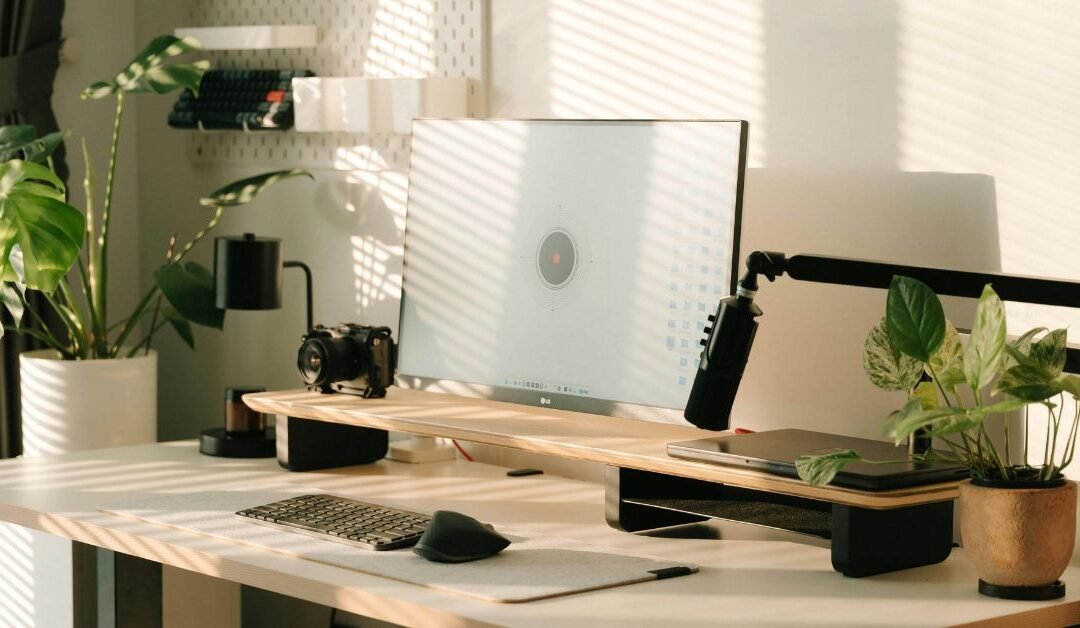
I spent a good chunk of my life surrendering two, sometimes three hours a day to Metro Manila traffic. You know the drill. You leave your place before sunrise to beat the crawl down Commonwealth, or Marcos Highway, or EDSA, you still don't beat it, and you arrive at your desk already spent, having accomplished nothing except memorizing the back of whatever catchy caption there is on a jeepney or truck's mudflaps. Then someone schedules a 9 AM meeting that could have been an email.
So when the return-to-office debate flares up again, I find it funny how it's always framed as a moral question. Are remote workers lazy? Are office workers being micromanaged? Nobody wants to talk about the boring part, which is the money. Both setups cost somebody something. The only honest question is who pays, and for what. And here in the Philippines, we have the strange distinction of being a country where that answer was, for a while, literally written into tax law.
Let me walk through the actual legal considerations.
The Philippine twist: RTO with the BIR behind it
In most countries, a return-to-office mandate is just a memo from a CEO who misses seeing full parking lots. Here, it had teeth.
When the pandemic eased, the Fiscal Incentives Review Board (FIRB) ruled that business process outsourcing firms inside economic zones had to go 100 percent on-site or lose their tax incentives. Work from home, and your company forfeits its income tax holiday. That is not a manager nagging you about "culture." That is the government tying your seat to the company's books. An IT-BPM coalition reportedly called the order "inhumane," citing the state of our public transport, and they had a point.
The industry voted with its paperwork. More than 440 companies moved their registration from PEZA to the Board of Investments just to keep people home without losing perks. Eventually the law bent. The CREATE MORE Act now lets registered firms keep their incentives while up to 50 percent of staff work from home.
And by April 2026, during a declared energy emergency, the FIRB temporarily pushed that ceiling all the way to 90 percent. Read that arc again. The same body that once demanded everyone come back blinked the moment fuel and electricity got expensive. Which tells you the on-site rule was never really about productivity. It was about geography and tax.
What the office costs the worker, and the country
Now the side of the ledger that mandates conveniently ignore. The commute isn't free. The worker absorbs it, and so does the economy.
A JICA study pegged the cost of Metro Manila traffic congestion at around ₱3.5 billion a day, which works out to roughly ₱1.27 trillion a year in lost time, fuel, and opportunity. Left unchecked, JICA projects that bleeds to ₱5.4 billion a day by 2035. Metro Manila has also ranked as one of the most congested metros on the planet in the TomTom index. Every Filipino forced into a five-day commute is paying into that number, in pesos and in hours they will never get back.
And those hours are the real cost. Whatever you save on a slightly cheaper office lease, you torch in human time idling on EDSA. That time has a price, and the worker pays it first.
The productivity argument that quietly fell apart
Here's where I get a little smug, because I never bought the "people slack off at home" line. The evidence agrees with me, which is always pleasant.
The largest study of its kind, the international research published in Nature by Stanford's Nicholas Bloom, found that hybrid work had zero effect on productivity or promotions and cut resignations by a third. No local randomized trial matches that scale, but the Filipino preference is loud and clear.
Citing Mercer's Global Talent Trends data, seven in ten Filipino employees treat it as a deal-breaker if they cannot work hybrid or fully remote. The IT and Business Process Association of the Philippines has said as much for years: its members have an "overwhelming preference" for flexible arrangements. When the people who actually run the floors keep asking for the same thing, maybe stop assuming they just want to slack.
Some might point out that WFH arrangements only work for those with resources. I know some people who do find cramped home setups, the cost of air-conditioning, and potential internet and power outages as potential productivity gremlins. But the time and effort saved from the commute are often cited as ways to cancel these concerns out.
So what is RTO actually about?
If the productivity case doesn't hold, what's left? Control and sunk costs, mostly. Somebody signed a long lease. Somebody equated a full office with a healthy company. Somebody decided that watching you arrive is the same as knowing you deliver.
I never believed offsite trust falls build real teams, and how organizations love to measure the wrong things. This is the same disease in a barong. Bums in seats is a metric that's easy to count and tells you almost nothing. Whether the person at the next desk actually comes through when a Friday deadline is bearing down has nothing to do with whether their chair was occupied at 9 AM. Mutual professional respect doesn't come from proximity. It comes from people reliably doing their jobs, wherever they happen to be sitting.
The work didn't change. The cost pressure did.
The honest verdict
There is no free option. Fully remote loses something real, mostly for people who are new, junior, or still learning by osmosis, and even the downsides of going all-remote. Full office hauls the entire commuting cost, all of those EDSA hours, onto the worker and buys the company nothing measurable in return. Hybrid keeps landing as the least-bad arrangement because it splits the bill more fairly. That is also, not by accident, exactly where our own law settled.
My take, for whatever a recovering commuter's opinion is worth: stop pretending this is about effort or loyalty. It's a cost allocation problem dressed up as a values debate. Decide honestly who should carry the cost of the office existing, then build a policy around that instead of around a sunk lease or a tax bracket.
Now if you'll excuse me, I have a meeting that could have been a group chat. At least this time I'm attending it in barefoot and not even in tsinelas.