
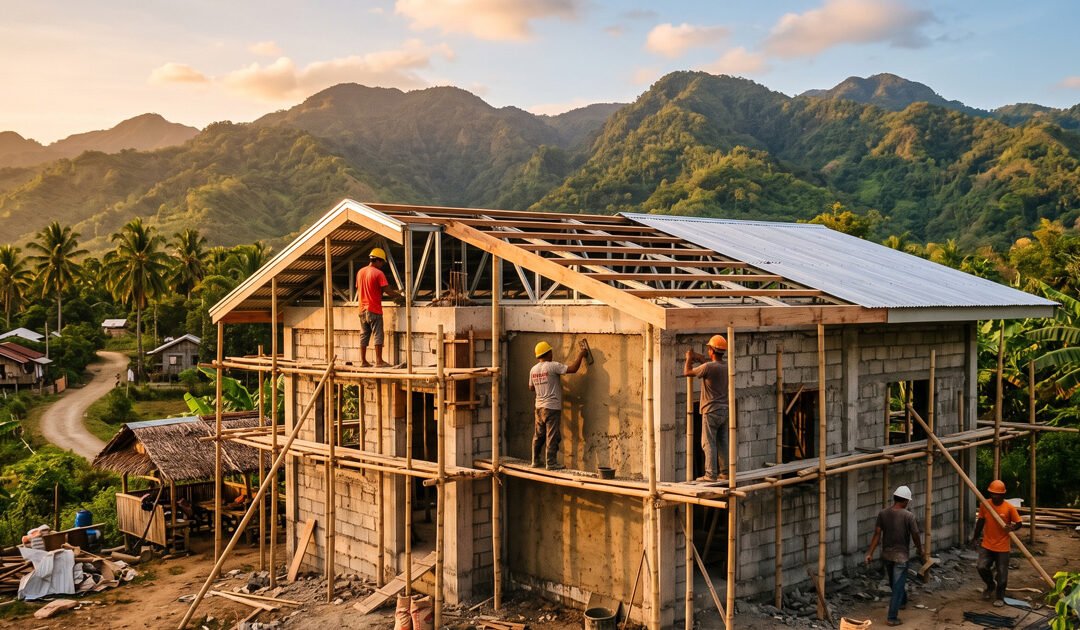
A number of OFWs have actually started being quite smart with their money. They're now looking beyond the monthly remittance and savings and getting into investments and other business ideas for OFWs.
Some are buying lots. It's quite common to see posts on social media asking what they can do with a 300 square meters in the province designated to be the plot of land for their retirement homes.
I get it. After decades of paying rent in Dubai or mortgage in California or ridiculous shoebox prices in Singapore, the dream of a house you designed yourself, on soil you actually own, hits different. But between the dream and the housewarming lechon sits a gauntlet of laws, permits, contractors, and math that can quietly eat seven figures if you sleepwalk through it.
So let's walk through it awake. This is the long-haul guide: who can legally own what, whether building actually beats buying, and the step-by-step for each route.
Note: This post is for general information only and is not legal or financial advice. Property laws, loan programs, and rates change; verify with the relevant agencies and consult a licensed professional before making decisions.
Step zero: figure out who can hold the title
Before you argue about kitchen layouts, settle the boring legal question first, because it decides everything else.
The 1987 Constitution reserves land ownership for Filipino citizens and corporations that are at least 60% Filipino-owned. That's Article XII and no visa, no marriage, and no amount of sincerity changes it. But there are several legitimate paths depending on who you are:
If you're an OFW who's still a Filipino citizen - congratulations, you can skip this entire section. Buy the lot, build the house, put your name on everything.
If you're a former Filipino who naturalized abroad - you have two options. The clean one is reacquiring your citizenship under RA 9225, which restores full property rights with zero area limits. The second option, if you'd rather not do the paperwork, is buying under BP 185, which lets former natural-born Filipinos own up to 1,000 square meters of urban land or one hectare of rural land for residential use. The Philippine Consulate General in Los Angeles has a tidy summary of both routes. For a retirement home, 1,000 square meters is honestly plenty, unless you're planning to retire with a carabao.
If you're a foreigner with no Filipino lineage - you cannot own the land, full stop. What you can do:
- Own a condominium unit outright under RA 4726, as long as foreign ownership in the project stays within 40%
- Own the house itself while the land is titled to your Filipino spouse (your name can't be on the land title)
- Lease private land long-term under RA 7652, traditionally 50 years renewable for another 25, and build on it. A 2025 amendment reportedly extended terms up to 99 years, but that applies to qualified registered investors, not lifestyle retirees, so read the fine print with a lawyer before assuming it covers you
And whatever you do, don't get cute with a "just put it in my friend's name" arrangement. The Anti-Dummy Law makes fronting schemes a criminal offense with prison time and forfeiture of the property. That's not a technicality. That's your retirement fund evaporating in a courtroom.
The honest math: does building actually save money?
Everyone assumes building is cheaper because you're "cutting out the developer's margin." Sometimes true. Sometimes a fantasy that dies at the hardware store.
Here's the current lay of the land. Industry estimates for 2026 put standard mid-range construction at roughly ₱35,000 to ₱45,000 per square meter, with economy builds starting near ₱20,000 and high-end finishes hitting ₱75,000 and beyond. For calibration, the Philippine Statistics Authority tracks average construction costs from approved building permits, which run lower than contractor quotes because they reflect declared values, so treat contractor estimates as your planning baseline.
Let me run the numbers for a realistic retirement setup: a 150 square meter single-storey house on a 300 square meter lot in a provincial suburb.
The build route:
| Item | Cost |
|---|---|
| Lot, 300 sqm at ₱8,000/sqm | ₱2,400,000 |
| Construction, 150 sqm at ₱35,000/sqm | ₱5,250,000 |
| Design fees (architect + engineers, ~8%) | ₱420,000 |
| Permits and clearances | ₱60,000 |
| Contingency (12%) | ₱630,000 |
| Lot transfer taxes and registration | ₱79,000 |
| Total | ₱8,839,000 |
That's roughly $152,000 at ₱58 to the dollar, or about ₱58,900 per square meter all-in once you count the land and the paperwork nobody puts on Pinterest.
The buy route: a comparable developer-built house and lot in the same area might list at ₱10,500,000. Add documentary stamp tax, transfer tax, and registration fees and you're at roughly ₱10,776,000, or about $186,000.
On paper, building saves you nearly ₱2 million. In practice, that gap is your reward for taking on 12 to 18 months of project management, contractor roulette, and material price swings. Underestimate the finishing phase (the number one rookie mistake) and watch that ₱2 million evaporate one bathroom fixture at a time.
The honest summary: building wins on cost and customization if you can supervise properly or trust someone who can. Buying wins on speed and financing convenience. Though that said, there are also a lot of shady developers that can cause you more headache.
The step-by-step for building
1. Secure the lot and do brutal due diligence
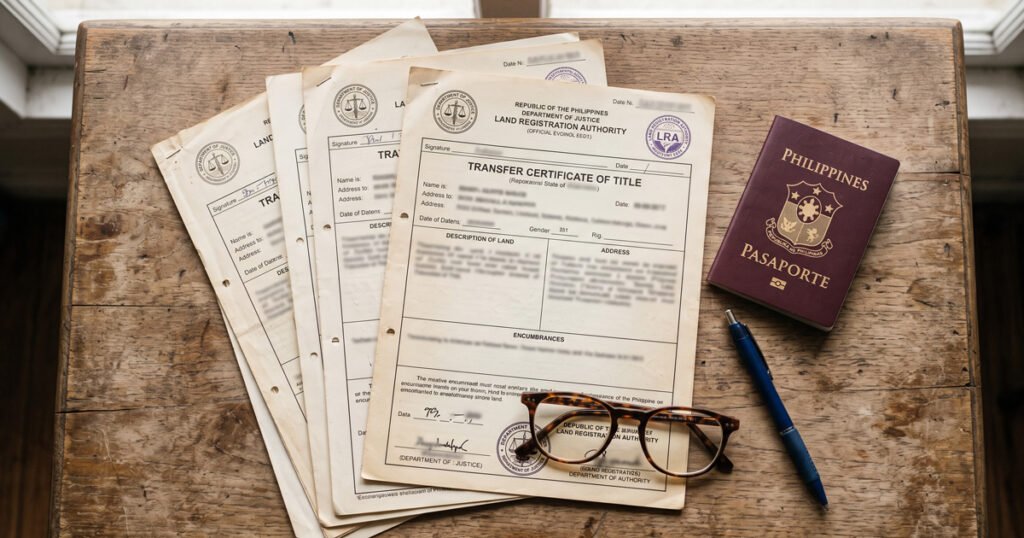
Get a certified true copy of the title from the Registry of Deeds. Check for liens, encumbrances, and whether the person selling actually owns it. Verify the tax declaration matches. Have a geodetic engineer confirm the boundaries because "hanggang doon sa puno ng mangga" is not a legal survey. If it's agricultural land, check whether it needs conversion clearance before you can build a residence. Budget weeks for this and consider it money well spent. Skipping due diligence is how people end up building a beautiful house on somebody else's lot.
2. Nail down the budget with a real contingency
Take your target floor area, multiply by your finish tier, then add design fees (5 to 10% of construction cost per industry practice), permits, and a contingency of at least 10 to 15%. If the total scares you, shrink the floor area now, not mid-construction. A smaller house you finished beats a bigger house na tumigil sa second floor.
3. Hire your design team
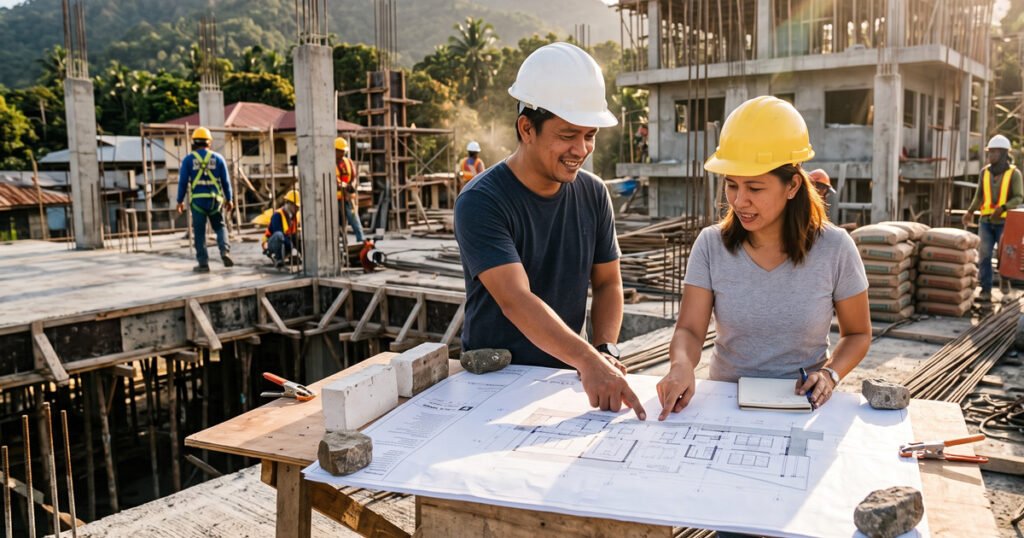
You need a licensed architect and engineers, and not just because the house should survive typhoons and earthquakes (though yes, that). Plans must be signed and sealed by licensed professionals to get a building permit at all. For a retirement home specifically, brief them on aging-in-place: single-storey or ground-floor master bedroom, wider doorways, grab-bar-ready bathrooms, minimal steps. Your 55-year-old knees will not consult your 70-year-old knees before approving that sexy floating staircase.
4. Get the permits before pouring anything
Under the National Building Code (PD 1096), no construction can legally start without a building permit from your city or municipality's Office of the Building Official. Expect to line up barangay clearance, locational clearance from the planning office, the building permit itself with its ancillary permits (electrical, sanitary, mechanical), and a Fire Safety Evaluation Clearance under the Fire Code. Requirements vary by LGU, so get the current checklist from your OBO. Building without permits invites stop-work orders, surcharges that can double your fees, and in the worst case, demolition. Also, no occupancy permit later means headaches connecting utilities or selling.
If you're doing this from abroad, execute a consularized Special Power of Attorney so a trusted representative can sign and file on your behalf. Choose this person more carefully than you chose your spouse. Kidding. Mostly.
5. Choose the contractor like your retirement depends on it, because it does
Get at least three quotes against the same signed plans and bill of quantities so you're comparing apples to apples. Check licenses, visit past projects, and talk to previous clients. The cheapest bid is often the most expensive project once the change orders and "sir, kulang po pala" messages start rolling in. Decide between a fixed-price contract (predictable, pricier) and cost-plus (flexible, riskier for absentee owners). For OFWs managing remotely, fixed-price with clear milestone payments is usually the saner choice.
6. Supervise the build, even from 8,000 kilometers away
Milestone-based payments tied to inspections, not to sob stories. Weekly photo and video updates as a contractual requirement, not a favor. If you can't fly home for critical stages (foundation, roofing, pre-finishing), pay an independent engineer or project manager to inspect on your behalf. It costs a fraction of what unsupervised "creativity" will cost you.
7. Close it out properly
After final inspection, secure the Certificate of Occupancy, then the Fire Safety Inspection Certificate. Update the tax declaration to include the new building. Keep every receipt, permit, and signed plan in one folder, physical and scanned. Future you, or future heirs, will send a prayer of thanks.
The step-by-step for buying instead
Shorter list, because the developer did the suffering for you:
- Shortlist by lifestyle, not brochure. Proximity to hospitals matters more at 65 than proximity to a wave pool. Check flood history, road access, and what the neighborhood sounds like at 5 a.m. (roosters are undefeated).
- Verify the developer and the project. Check the DHSUD license to sell, and for condos, confirm the project hasn't hit the 40% foreign ownership cap if that applies to you.
- Scrutinize the title and the contract to sell. Same Registry of Deeds homework as the build route.
- Negotiate and compute total acquisition cost, not just list price. Closing costs add 3 to 5% easily.
- Inspect before accepting turnover. Punch-list everything. Developers fix things much faster before you sign the acceptance form than after.
Financing the thing
If you're a Pag-IBIG member, this is where your contributions finally flex. Pag-IBIG cut its promotional rates in 2026: as low as 4.5% per annum fixed for three years on loans up to the ₱2.5 million low-cost ceiling, and 5.75% on loans above ₱2.5 million up to ₱10 million, with applications open until end-2026. Socialized housing loans under the Expanded 4PH program carry a 3% rate, and OFWs get dedicated slots in these programs. Pag-IBIG loans can fund lot purchase and house construction, not just ready-built units, which makes it viable for the build route too. Check current terms straight from Pag-IBIG before planning around any number here.
Quick illustration: a ₱4,000,000 loan at 5.75% over 20 years runs about ₱28,100 monthly. Doable on a typical OFW income, but remember the amortization generally can't exceed 35% of your gross monthly income, so back-compute what you actually qualify for.
Two caveats. Rates reprice after the fixed period, so stress-test your retirement budget against a higher rate, not the promo rate. And if you're a foreigner, note that Philippine banks generally don't lend to non-resident foreigners, so the realistic plan is cash, or financing through your Filipino spouse's qualification.
So which one is for you?
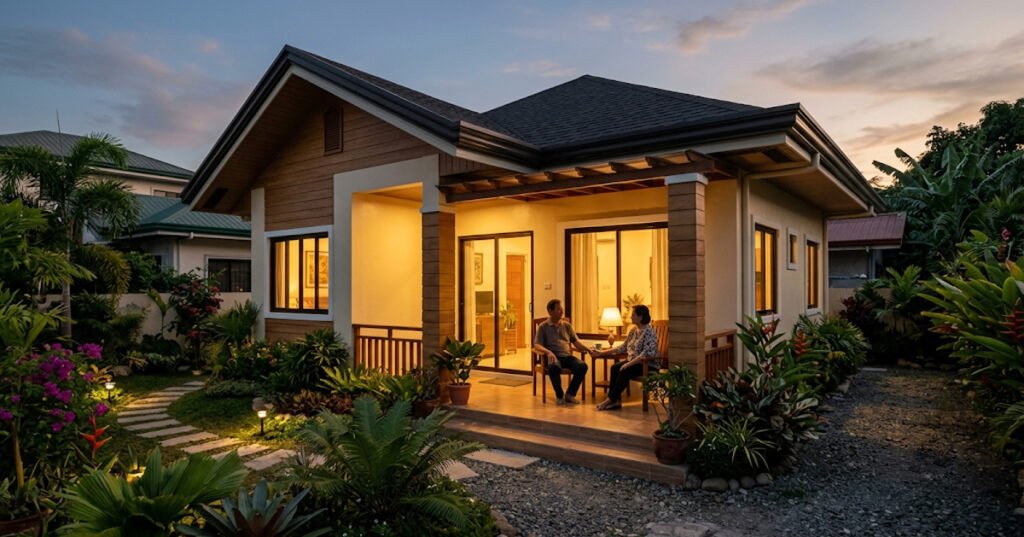
Build if: you (or someone you trust with your life savings, literally) can supervise, you have 12 to 18 months of runway before you need to move in, and customization matters, especially aging-in-place features that developer units rarely include.
Buy if: you want to lock in a home before retirement day, you're managing everything from abroad with no reliable boots on the ground, or the thought of contractor group chats raises your blood pressure at a stage of life when it really shouldn't.
And regardless of route: settle the ownership structure first, put everything in writing, and rent in the target area for a few months before committing if you've been away for decades. The province in your memory and the province today may be very different places, in both good and expensive ways.