
So we won something. Should we rejoice with the usual unhealthy amount of peenoise?
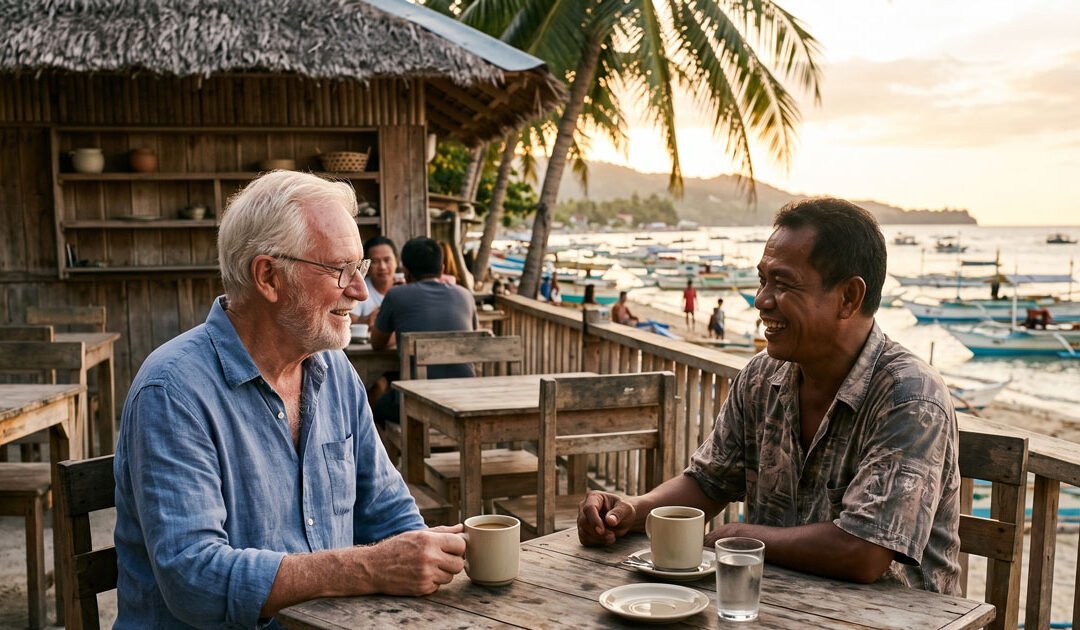
In June 2026, a United Kingdom insurance outfit called Expatriate Group released its Retirement Abroad Index, and guess who landed at number one. Tayo. The Philippines scored 78 out of 100 and beat out Thailand, Colombia, Portugal, South Africa, and Sri Lanka for the top spot.
And look, I want to be proud. But when I read a headline like "best country to retire in," my brain does this annoying thing where it asks: best for whom, exactly? Because there's the version of the story that's in the press release, and then there's the version we live.
Let me give you both.
What the index actually measured
First, credit where it's due. The ranking wasn't pulled from thin air. The index scored each country on five things: healthcare quality, visa accessibility, health insurance requirements, cost of living, and how easy it is for expats to integrate into the community.
On most of those, we genuinely deliver. The report said a retired couple can live comfortably here on around £750 to £1,000 a month. At today's exchange rate, that's roughly ₱60,750 to ₱81,000. For a couple. Living comfortably, not survival mode.
Try renting a one-bedroom in London or Sydney for that and tell me how far you get. The other big winner was our retirement visa, which the index called one of the most accessible it assessed.
The money math (this is where it gets real)
Here's the thing about that £750 to £1,000 figure: it's true, but it's leaving out the asterisk.
A comfortable, "local-plus" lifestyle for a foreigner in a provincial city looks something like this per month:
- Rent for a modern one-bedroom condo: ₱22,000
- Utilities and internet (yes, including aircon): ₱9,000
- Groceries: ₱14,000
- Dining out and leisure: ₱10,000
- Transport (Grab, tricycle, the occasional roadtrip): ₱5,000
- Private health insurance and meds: ₱9,000
- Phone and the random gastos: ₱4,000
That's about ₱73,000 a month, or roughly $1,200. Cost-of-living trackers put a minimum foreigner budget in provincial cities like Dumaguete or Iloilo at around ₱54,000, with a genuinely comfortable spread landing closer to ₱73,000 to ₱119,000 depending on the city. Metro Manila, predictably, eats more.
Now read those numbers again, pero this time as a Filipino. ₱73,000 a month is not a "modest" budget here. That's more than double the take-home pay of a huge chunk of the workforce. The lifestyle the index calls comfortable is comfortable precisely because it's being funded in pounds, dollars, or euros and spent in pesos.
That's not a knock on the foreign retiree. It's just the quiet engine under the whole ranking. We're affordable to people who don't earn here. Ibang kuwento kapag ikaw ang kumikita ng peso at gumagastos ng peso.
The visa that opened the floodgates
The crown jewel of our retirement pitch is the Special Resident Retiree's Visa, or SRRV, run by the Philippine Retirement Authority.
In September 2025, the PRA reworked the program and quietly made it a lot more attractive. The biggest change? They dropped the minimum age from 50 to 40. Hindi mo na kailangang maging tunay na retired para sa "retirement" visa. Forty na lang, may pondo, pwede ka na.
Here's the deposit structure under SRRV Classic:
- Age 50+ with a pension: $15,000 (around ₱915,000)
- Age 50+ without a pension: $30,000 (around ₱1.83 million)
- Age 40 to 49 with a pension: $25,000 (around ₱1.53 million)
- Age 40 to 49 without a pension: $50,000 (around ₱3.05 million)
The "qualifying pension" bar is a lifetime benefit of at least $800 a month for a single applicant, or $1,000 if you're bringing dependents. There's a one-time PRA processing fee of $1,500 and an annual fee of $360 for the principal plus two dependents.
The deposit, importantly, is refundable. It's parked in an accredited bank, and under certain conditions you can convert it into a condo purchase or a long-term lease. And the perks are real: indefinite stay, multiple entry, exemption from travel tax, tax-free pensions, and duty-free importation of household goods up to $7,000.
As of mid-2025, around 60,000 people held active SRRVs, mostly from China, South Korea, India, and the United States. That's a small city of retirees, parked here on purpose.
One catch the press releases tend to skip: a foreigner cannot own land outright in the Philippines. Foreigners can own a condo unit or take a long lease. Worth knowing before anyone ships their entire life over here expecting a house and lot with their name on the title.
The healthcare asterisk nobody puts on the brochure
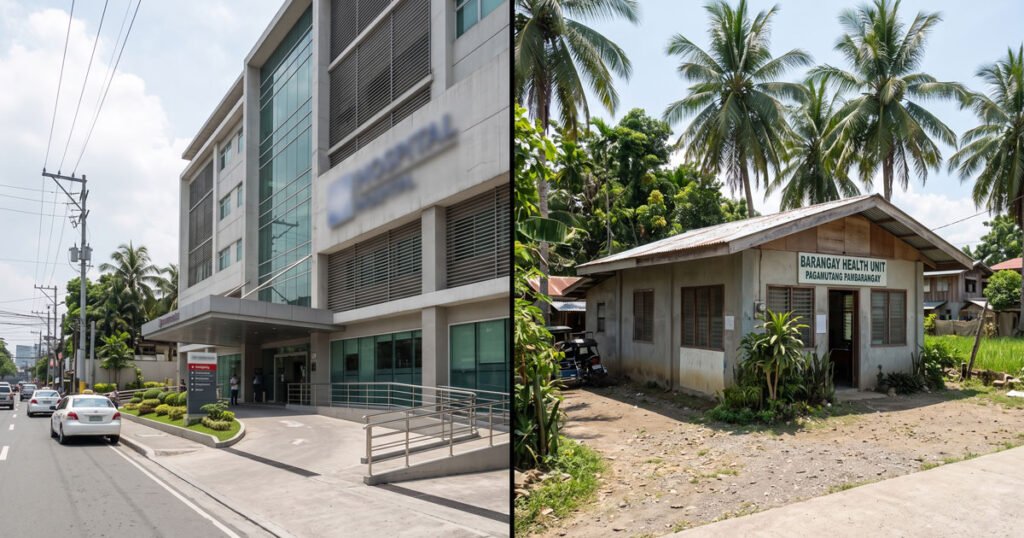
Even the index admitted this one. Our healthcare scored well in the cities and poorly everywhere else.
The exact line was that you need health insurance "robust enough to bridge the gap between excellent urban healthcare and more limited provision elsewhere." Translation: the private hospitals in Manila, Cebu, and Davao are genuinely good. The rural health unit two towns over from your beachfront dream house might not be.
If you've ever had a relative in a province who needed serious care, you'd get this. You don't get sick in the barrio. You get sick and then you travel three hours to a real hospital. A foreign retiree picturing a quiet island life needs to budget for that reality, not just the sunset photos.
As for insurance, there are ways to get healthcare plans but temper your expectations. You might be able to save up on some procedures but facilities and services will vary. There's no medevac helicopter on standby that would rescue your sorry ass if you happen to settle in a picturesque but isolated part of the country.
Now the part the tourism office won’t touch
Here's where I have to be honest, kasi this blog isn't a brochure.
There's a whole slice of this "retirement" story that has nothing to do with cost of living and everything to do with companionship. Walk around Dumaguete, Angeles, or parts of Cebu and you'll see it: men in their sixties with partners in their twenties or thirties.
Let's not be naive about what's happening in this regard.
For some of these men, the appeal is explicitly that a Filipina will care for them as they age. The "exotic looks," the perceived warmth, the cultural script of the devoted wife. It gets marketed, openly, by an entire cottage industry of dating sites and "find your Filipina" blogs. The age difference in these foreigner-Filipina marriages can be a 10+ year gap, and can be much wider.
Plenty of these are real relationships with real love, and a lot of women enter them with clear eyes about exactly the trade they're making. Adults making adult choices.
But let's also name the other side honestly. For many Filipinas, the stated motivation is financial security and a way out of poverty, not for themselves alone, but for the family behind them. And that's where the math gets heavy in a way no retirement index will ever score.
“Umangat sa kahirapan” comes with a bill attached
Here's the part that's painfully familiar to every Filipino reading this.
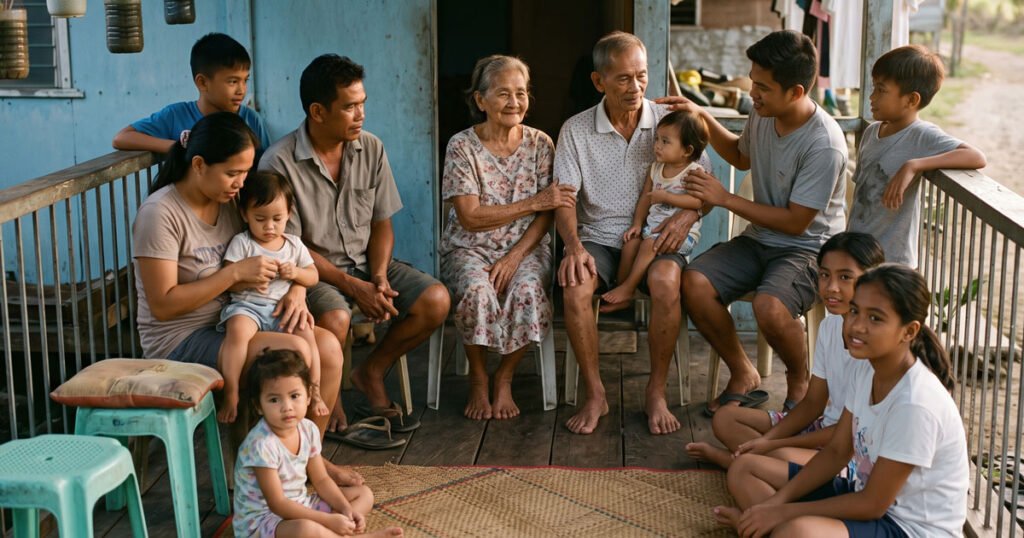
When a Filipina partners with a foreigner who's perceived to have money, she's rarely lifting just herself. She's lifting the whole clan. Magkano ang tuition ng pamangkin. Yung gamot ni Tatay. Yung kapatid na walang trabaho. Yung kisame ng bahay na kailangang ayusin bago tag-ulan.
This isn't a stereotype I'm inventing. It's a documented pattern.
So when a foreigner "retires comfortably" here with a Filipina partner, sometimes what's actually happening is that his pension is now quietly funding an extended family of eight. I'm not saying this to villainize anyone. I'm saying it because "best country to retire" frames the Filipino as scenery, the friendly local, the warm culture, the smiling face.
It almost never frames us as people doing labor, emotional and financial, inside these arrangements. And a lot of us are.
So, is the ranking wrong?
No. That's the uncomfortable part. The index is mostly right.
If you earn in a hard currency, the Philippines is, genuinely, one of the best deals on the planet for retirement. Affordable, English-speaking, warm in every sense, with a visa program that just rolled out the welcome mat even wider. I'd recommend it to a foreign friend without hesitation.
But "best place to retire" is a sentence written from the buyer's chair. From where most of us sit, the same country that's a bargain to a retiree from Manchester is brutally expensive to a call center agent in Cubao. Same islands, same prices, completely different experience depending on which currency lands in your account.
The trick, if you're a Filipino reading this, isn't to resent the ranking. It's to notice the gap and try to land on the right side of it. That's the whole reason this blog exists, to figure out how a regular Pinoy builds enough of a peso cushion that "comfortable in the Philippines" describes us too, not just the visitors.
Kaya naman, dito na tayo magsisimula.
Para sa inyo: kung may foreigner kang kakilala na nagretire dito, ano ang totoong kuwento, gaano kalayo ang peso nila kumpara sa peso natin? Kuwento mo sa comments.