
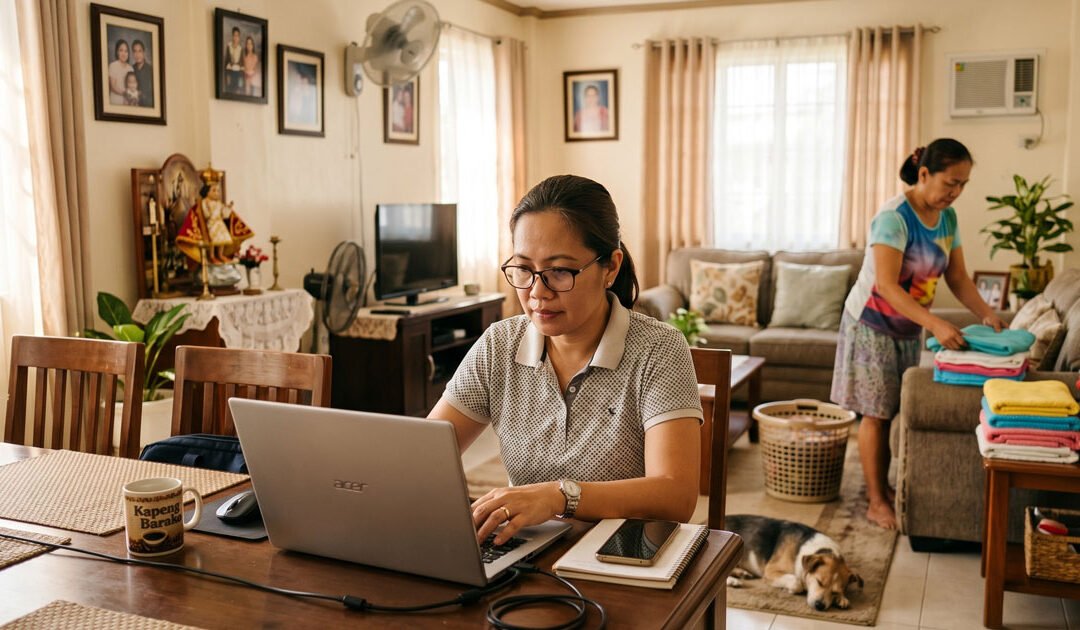
My mom raised us right. There is no household chore I can't do. Granted that I'm not the best at folding clothes or ironing them. But I'm never afraid not to have a house help. It's funny how I've come to know people who panic and become desperate at the thought of not having helpers around the house.
For the middle class household, having a kasambahay can make a lot of sense. It can free you up from the menial and tedious stuff. The time you save, you can then spend on your kid or a side hustle, or just yourself.
But these days, has the kasambahay become a luxury? Let's be honest, gone are the days when househelps are loyal. They stay with your family for a long time that they become truly part of the family. A good number have now become entitled - asking for perks such as their own (airconditioned) rooms, allowances, internet, and choice of meals. And the quality of their service have become varied too.
Let us actually do the math. No guilt, no "ang arte mo naman," just the numbers. How much does a kasambahay really cost in 2026, what does the law require, and is the whole arrangement even worth it?
The cost and it is not just the sweldo
Here is where most people get the numbers wrong. They think "kasambahay" means one figure, the monthly sweldo, and that is it. It is not.
As of February 7, 2026, the minimum wage for a kasambahay in Metro Manila is ₱7,800 a month, up ₱800 from the old ₱7,000 under Wage Order No. NCR-DW-06. That covers general househelp, yaya, cook, gardener, and laundry workers, whether stay-in or stay-out.
But ₱7,800 is the floor, not the going rate. On the ground, recruitment data suggests a "survival floor" of around ₱10,000 to ₱12,000 has quietly become the real market rate, with experienced yayas and cooks commanding ₱2,000 to ₱5,000 more on top.
If you are reading this from Antipolo or anywhere in CALABARZON like me, your regional wage order is lower than NCR, somewhere in the ₱5,000 to ₱6,000 range, though I would cross-check the latest figure before you finalize anything.
And then there are the parts of the bill nobody warns you about.
The hidden costs: contributions, 13th month, and the stay-in tax
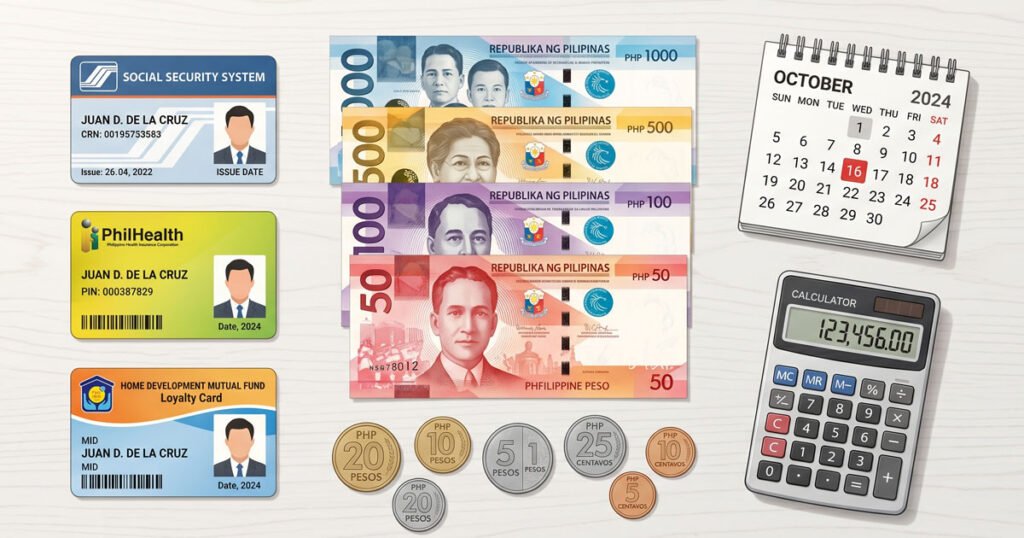
The Batas Kasambahay, Republic Act 10361, is very clear: a kasambahay who has worked at least one month is your employee, full stop. That means you, the employer, must register them and remit monthly to SSS, PhilHealth, and Pag-IBIG.
The contribution rule is the part people miss. If the salary is below ₱5,000, you shoulder the whole thing. At ₱5,000 and above, which is basically everyone in NCR now, the standard split kicks in.
Let me lay out the real all-in cost for a stay-in kasambahay earning the ₱7,800 minimum:
| What you actually pay | Monthly |
|---|---|
| Sweldo | ₱7,800 |
| SSS employer share (incl. EC) | about ₱810 |
| PhilHealth employer share | about ₱250 |
| Pag-IBIG employer share | about ₱156 |
| 13th month pay (accrued monthly) | about ₱650 |
| Food, three meals a day | about ₱4,000 |
| Utilities and toiletries share | about ₱1,200 |
| Total | about ₱14,900 |
That is roughly ₱178,000 a year for a single live-in helper. The SSS contributions run on the current 15% rate, and the PhilHealth and Pag-IBIG figures I am using here come from secondary calculators, so verify them against the latest PhilHealth and Pag-IBIG circulars before you budget. (Flagging this para sa sarili kong peace of mind too.)
Strip out the food and lodging for a stay-out arrangement and the all-in cash cost drops to around ₱9,700 a month, or about ₱116,000 a year. Cheaper, but you also lose the round-the-clock availability that made you want help in the first place.
Stay-in, stay-out, or part-time?
Not every household needs a 24/7 yaya. The arrangement you pick changes the math completely.
Stay-in is the classic setup. Highest cost, highest convenience. You are feeding and housing another person, but you also have help available at 6am when the baby will not stop crying. Worth it for families with young kids or elderly parents na hindi pwedeng iwan.
Stay-out trims your food, lodging, and utility costs but keeps the legal obligations intact. The kasambahay goes home at night. Good middle ground for couples who mainly need cleaning, cooking, and laundry handled while they are at work.
Part-time or per-day help (the labandera who comes twice a week, the cleaner who does a deep clean every Saturday) is the lightest commitment. Note the legal nuance here: someone who works only occasionally and not on a regular, "occupational" basis may fall outside the kasambahay wage order entirely. For a lot of small condo households, this is the smartest entry point. Pay ₱500 to ₱800 a day, no live-in overhead, no 13th month headaches.
The case FOR hiring help
Now the honest pros, beyond "ayoko maghugas ng pinggan."
You buy back your time. This is the real product. If you and your partner both work, the hours you spend on chores have an opportunity cost. When the cost of help is lower than what your time is worth (or lower than the income that second worker frees you to earn), hiring is not a luxury. It is arbitrage.
Dual incomes become possible. Plenty of Filipino households can only keep both spouses working because a yaya watches the kids. Take away the help and one salary disappears. Suddenly that ₱15,000 monthly all-in cost is buying you a ₱40,000 salary. That math is not close.
Sanity and elder care. Some things are not financial. Caring for aging parents, managing a chaotic household, protecting your marriage from the slow grind of resentment over who did the dishes. These are real returns even if they never show up on a spreadsheet.
The case AGAINST (the part agencies will not tell you)
You become an employer, with all the paperwork. Registering with SSS, PhilHealth, and Pag-IBIG, issuing payslips, keeping records for three years, computing 13th month by December 24. Skip it and the penalties under RA 10361 run from ₱10,000 to ₱40,000, plus back wages and contributions. "Pag may pera kami" is not a compliance strategy.
You lose privacy. A stay-in helper means a third adult living in your space, hearing your arguments, knowing your routines. For some families this is fine. For others it is a slow erosion of the thing that makes home feel like home.
Management is a job in itself. Hiring, training, mediating, replacing. The turnover in this sector is real, and "nawala na lang bigla" is a story every employer eventually tells.
It can quietly fuel lifestyle creep. Help frees up time, sure. But it also normalizes a tier of spending that is hard to walk back. Once you have a kasambahay, going without feels like a downgrade, even in months when money is tight.
The OFW and balikbayan angle
If you are reading this while planning your comeback from abroad, here is a perk that does not get enough airtime. The help you could never dream of affording in Dubai, Riyadh, or Toronto is genuinely within reach here.
A live-in helper for ₱15,000 a month is a rounding error compared to childcare costs overseas. For a returning family with both parents working remote jobs paid in foreign currency, hiring local help is one of the most underrated financial advantages of moving back. It is the kind of comfortable-comeback math that makes the whole repatriation decision feel a lot more doable.
Just go in as a legal, compliant employer, not as someone trying to recreate a 1990s arrangement. The law has changed. Your kasambahay has rights, a contract, and government contributions, and treating that as the baseline (not as a favor) is exactly what separates a healthy household from a complaint at the DOLE.
So, is it worth it?
Here is my honest verdict. Run this quick test:
- Does help let both adults in your household keep earning? If yes, it almost certainly pays for itself.
- Is your time worth more per hour than the all-in cost of help? If yes, hire and stop feeling guilty.
- Are you ready to be a compliant, paperwork-filing employer? If no, start with part-time help until you are.
If you answered no to the first two, a once-a-week labandera might be all you need. If you answered yes, then the ₱10,000 to ₱15,000 a month is not an expense. It is the price of getting your evenings back.
I caved, by the way. I now sleep at a reasonable hour, and the dishes are someone else's 11pm problem. Worth every peso? Para sa akin, oo.
Kayo, how do you handle the help question in your household, stay-in, stay-out, part-time, or full DIY? I would love to hear how the math worked out for you.