
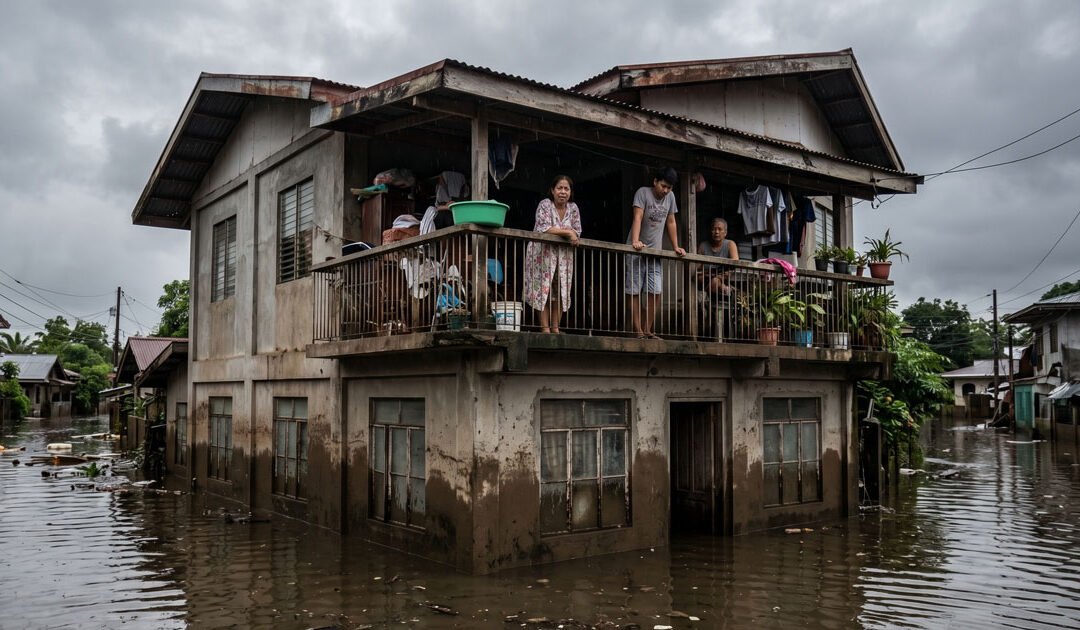
It's typhoon season again and it's better to prepare.
Last rainy season, our street flooded ankle-deep within twenty minutes of a downpour. Nothing biblical, just the usual baha that creeps up the gutter and makes you regret not buying that place on higher ground. But here's the thing nobody warns you about when you're a kid waiting for the magic words "walang pasok." The storm doesn't just soak your street. It can drain your bank account too.
The Philippines sits right in the path of around 20 tropical cyclones a year, with eight or nine of them actually making landfall. That's not a freak event you prepare for once. That's a recurring line item in your household budget, whether you've written it down or not. So let's actually write it down. Here's where the peso bleeds when the rain comes.
Your grocery bill gets a typhoon surcharge
Your grocery budget can take quite the hit when the typhoons and flood waters come.
When a strong typhoon hits Northern Luzon or the Visayas, it doesn't just flood farms. It cuts the roads that bring vegetables to Metro Manila markets. Less supply, same demand, prices shoot up. After the triple typhoons of July 2025, the Department of Agriculture's price monitoring showed chili jumping from ₱143 to ₱317 a kilo, and pechay nearly doubling from ₱88 to ₱168 (per DA data). Carrots went up 75 percent. Your ginisang gulay suddenly costs like it has sahog na wagyu in it.
This isn't a one-off either. For all of 2024, weather events caused around ₱57.58 billion in agricultural damage. Economists even have a name for it now: "flood inflation" or "floodflation." Weird how our crummy situation pushes our creativity.
And the cruel part? The price spike outlives the storm. The typhoon passes in two days, but the expensive sili stays for weeks while farms recover. As of May 2026, food inflation was still running at 5.7 percent, with rice alone at a painful 15.6 percent. Weather is a big reason why.
There's some protection on paper. When an area is placed under a state of calamity, the Price Act lets the government freeze prices of basic goods for 60 days. Good to know. But a price freeze on canned sardines doesn't help much when it's the fresh kangkong that tripled.
The lights go out, and so does your fridge
Power outages caused by storms can compound the issues. If you keep your fridge properly stocked, an outage can cost you what's in it. Frozen produce needs to be kept at -18C in your freezer. Elsewhere, your other food items should be at 4C. A freezer's worth of spoiled food, easily ₱3,000 to ₱8,000 gone.
Sometimes, it can even cost you the actual fridge. Outages can cause bad electrical surges that can fry your electronics. A lot of appliances that feature inverter technologies can be sensitive to power surges. A fried fridge needing repair or replacement, ₱5,000 for a fix or ₱20,000-plus for a new unit. Add the petsa de peligro timing that storms always seem to have, and you've got a real cash flow problem.
Then there's the slow bleed. Electricity itself keeps getting pricier, with the housing, water, and electricity group posting 8.9 percent inflation in May 2026. Storm season also means charging all your electronics at once, and burning load on mobile data when the fiber Internet dies. Small amounts, but they pile up across the habagat season.
When your car becomes a very expensive boat
Here's a mistake a lot of us make, and it's an expensive one: assuming "comprehensive" car insurance covers flood damage. It usually doesn't.
Standard comprehensive covers theft, collision, and third-party stuff. Damage from typhoons and floods falls under acts of nature (AON) coverage, which is almost always a separate add-on you have to ask and pay for. Older policies used to call it "acts of God" (AOG). Whatever it's called, it's supposed to cover force majeure situations, including floods. Skip it, and a flooded engine is 100 percent on you.
And a flooded car is not a cheap fix. Once water gets into the cylinders, you're often looking at a major repair or a full engine replacement, easily six figures. Most modern vehicles are loaded with electronics. If they get wet, it's easy for entire car systems to go kaput. If the repair cost gets close to your car's market value, the insurer may just declare it a constructive total loss and you're back to shopping for a ride.
The add-on isn't free, but it's reasonable. Comprehensive runs roughly 1 to 2 percent of your car's value, and acts of nature can add around 30 percent on top of that premium. Most policies also carry a 2 percent deductible on the affected item. So yes, protection costs money. Pero compare that to a ₱150,000 engine you pay for solo.
One more trap: negligence voids the claim. If you drive through a flooded street despite a public storm warning from PAGASA, the insurer can reject you for being pasaway. The smart move is boring: park on high ground, and when in doubt, don't drive.
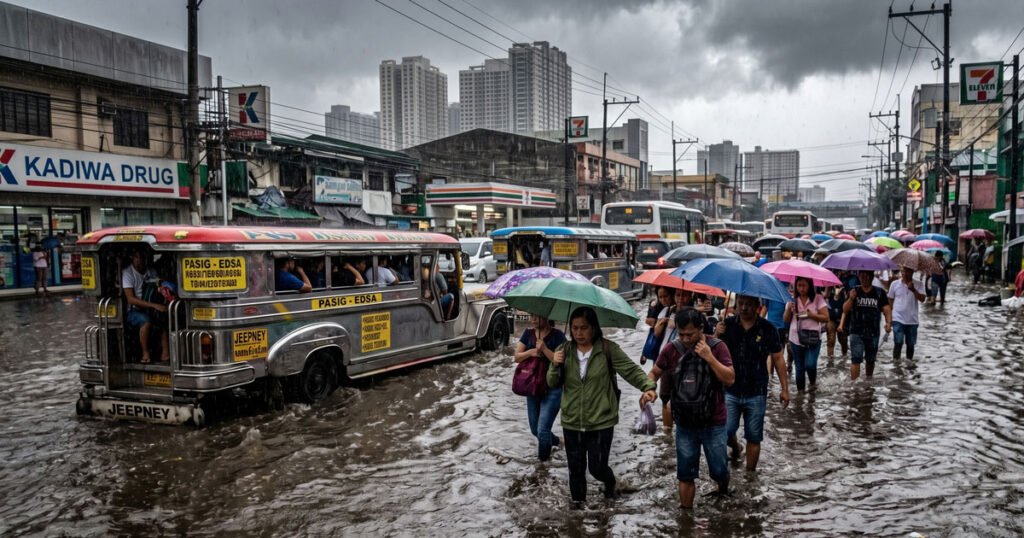
The commute that eats your income twice
Storms hit your wallet even if your car stays dry and your fridge survives. They get you on the way to work.
First, the obvious one: flooded roads, cancelled trips, surge-priced rides. A commute that normally costs ₱60 suddenly costs ₱300 because tricycles are charging hazard rates and the only Grab available is priced like a domestic flight. You either pay it or you don't get to work.
Then the bigger, quieter hit: lost income. "Walang pasok" is a relief when you're in school. When you're a daily wage earner, a no-work-no-pay day, or a market vendor whose goods got soaked, suspended work means suspended income. The kid celebrates the storm. The earner does the math.
For freelancers and remote workers, it's the power and internet that go. No connection, missed deadlines, maybe a missed payment milestone. I've lost productive days to exactly this. The work doesn't disappear, it just gets compressed into stressful catch-up later.
None of these show up as a single big bill. They show up as a slightly emptier wallet at the end of the month, and you can't quite explain why.
Floodwater makes you sick, and getting sick is expensive
This is the cost people forget until they're in the ER.
Wading through baha is not just gross, it's genuinely dangerous. Leptospirosis, a bacterial infection spread through floodwater contaminated by rat urine, spikes every rainy season. The Department of Health logged 3,037 cases from January to July 2025, with over a thousand of those coming right after the rains started. By early September, the count had climbed to 4,859. Severe cases attack the kidneys, lungs, and brain. People die from this every year.
Now put a peso figure on it. A serious lepto case can mean days of confinement, dialysis, and a hospital bill that runs into the tens or even hundreds of thousands. That's the kind of expense that wipes out an emergency fund, or worse, sends a family into utang. And lepto is just one of the lineup. Dengue, diarrhea, skin infections, and respiratory bugs all ride in with the floods.
The annoying truth is that most of this is preventable for the price of caution. Don't wade if you can avoid it. Wash thoroughly if you do. See a doctor early for fever and body pain instead of self-medicating. A ₱200 consult beats a ₱200,000 admission every single time. The cost of getting sick is real.
The biggest hit: what storms do to your home
If you own (or dream of owning) a house, this is the section that matters most. Because the most expensive thing a storm can damage isn't your gadgets. It's your single biggest asset.
Repairs are the obvious part. Roof damage, soaked drywall, ruined flooring, rusted-out appliances, mold blooming in the walls weeks later. A serious flooding can mean six figures of restoration, and our standard fire insurance usually doesn't cover flood unless you specifically added acts of nature coverage to the policy. Same trap as the car.
Depreciation is the part nobody talks about. Here's the uncomfortable math: a property in a known flood zone simply isn't worth as much. Philippine appraisers using standard valuation methods typically apply a 5 to 15 percent downward adjustment for documented flood-prone locations, and that can reach 20 percent or more if the area floods multiple times a year.
Put real numbers on it. On a ₱5 million home, a 10 percent flood-zone discount is ₱500,000 shaved off your net worth, just because of where it sits. After the floods from Ondoy in 2009, sellers in the worst-hit subdivisions couldn't find buyers even at bargain prices. Buyers have long memories, and the internet now remembers for them.
So if you're house hunting, the single most valuable thing you can do is check the flood risk before you sign anything. Use Project NOAH and HazardHunterPH to pull up hazard maps for the exact address. Under RA 10121, local governments are also required to do hazard mapping, so ask the LGU. A flood-free lot might cost more upfront, pero it holds its value and saves you from a lifetime of repair bills. That's not an expense. That's the cheapest insurance there is.
So what do you actually do about it?
You can't stop the rain. But you can stop it from drowning your finances. Three moves, in order of importance.
Build a storm-ready emergency fund. Not the generic three-to-six months, but a specific buffer for spoiled food, surprise repairs, surge transport, and a possible hospital trip. Even ₱20,000 set aside changes how a typhoon feels.
Check your coverage now, not after. Confirm whether your car and home policies actually include acts of nature. If they don't, the add-on is cheap relative to a flooded engine or a soaked house. Do it before storm signal number two, because insurers won't add it mid-typhoon.
And if you're buying property, treat the hazard map as non-negotiable. Location is the one storm cost you can decide on before it ever rains.
Storms are part of life here. We grew up with them. But "bahala na" is a terrible financial plan. The families who weather the season best aren't the lucky ones. They're the ones who prepare for the rainy days.