
Disclaimer: This article is for general information and isn't personalized financial advice. For decisions specific to your situation, it's worth talking to a licensed financial advisor.
Last year, our refrigerator died in the middle of a brownout. One minute the compressor was humming, the next it was a P40,000 paperweight full of thawing meat I had to cook in a panic early in the morning. A few months later, my phone screen started growing a black hole of dead pixels and I ended up panic-buying a replacement at a tad above market price because I couldn't afford to be locked out of my email and my work.
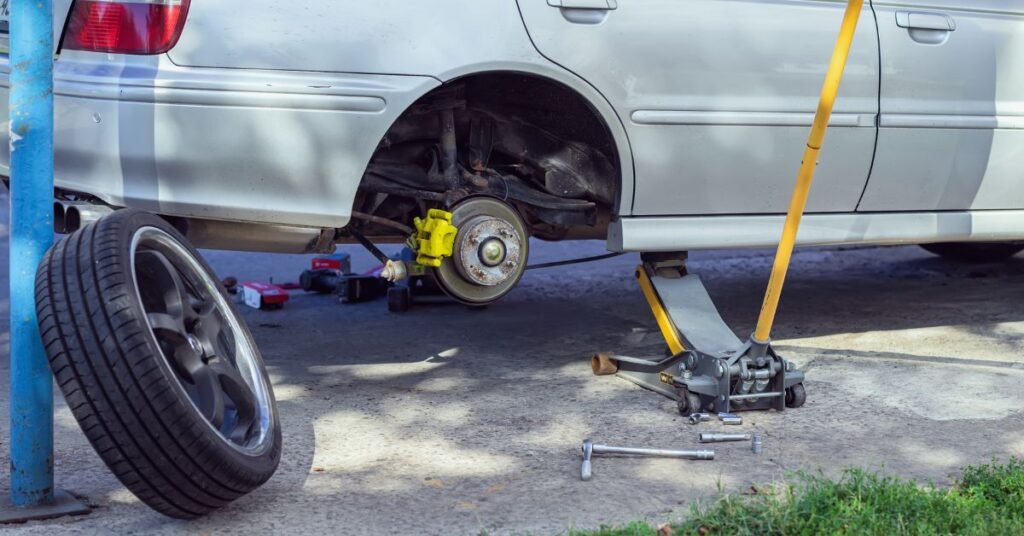
Here's the thing about those two incidents. Neither of them was a tragedy. Nobody got sick, nobody lost a job. They were just ordinary appliances doing what appliances eventually do, which is crap out at the worst possible time. And yet both of them stung, because they landed all at once and demanded cash I had not exactly set aside for "the fridge will explode" or "the screen will croak."
Fortunately, neither were job loss or anything medical in nature. Those are a totally different topic but an emergency fund could very well serve you in all these cases.
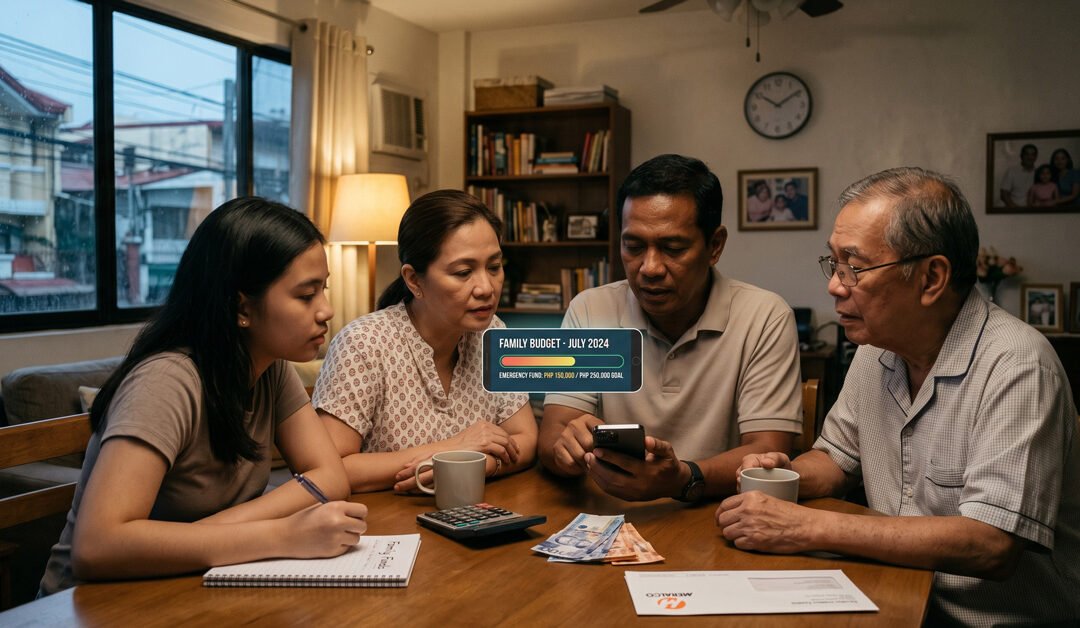
We've discussed this in our Filipino middle class budget guide. That little buffer between you and a bad week is what people mean when they talk about an emergency fund. If you have ever felt that cold-sweat feeling when an unexpected bill shows up, this post is for you.
What an emergency fund actually is
An emergency fund is a stash of cash you set aside for exactly one job: covering the curveballs. A medical bill. A sudden job loss. The aircon dying in April. A flight home because a parent got rushed to the hospital. It is money that sits there doing nothing exciting, on purpose, so that when life throws a brick through your window you can pay the glazier without reaching for a credit card or borrowing from a relative.
Let's be clear about what it is not. It is not your house downpayment fund. It is not your "baka magka-sale ang PC parts" fund. It is not an investment you are trying to grow. The whole point of an emergency fund is boring stability and instant access, which means it is the one pot of money where chasing returns is the wrong goal.
Think of it as the buffer that keeps a small problem from snowballing into a debt spiral.
Why it matters more than you think (especially here)
Filipinos love to think we are madiskarte. We will find a way. And we do. But "diskarte" often usually means borrowing, selling something, or working a side hustle into the ground after the emergency already hit. If we can reframe it, an emergency fund is diskarte you did in advance, when you were calm and had options.
The numbers say most of us are flying without that safety net. According to the Bangko Sentral ng Pilipinas' 2025 Consumer Finance and Inclusion Survey, only about 30 percent of Filipino adults said their savings could carry them through an emergency or a loss of income. That means roughly seven out of ten of us are, in the BSP's point of view, basically one crisis away from real trouble. Financial resilience was flagged as the single weakest part of Filipinos' financial health.
What makes it more sobering is that we are not getting there for lack of knowing better. The same survey found basic financial literacy actually climbed to 74 percent, up from 69 percent in 2021. We know we should save. We just have not managed to. A separate Sun Life study put it bluntly: one in three Filipinos said that if they lost their income or got sick, they could not sustain themselves for more than three months.
And it is getting harder, not easier. As recently as June 2026, Sun Life's Financial Resilience Index found the share of Filipinos with "high" resilience dropped sharply to 19 percent from 33 percent a year earlier, as rising prices forced households into short-term trade-offs. Inflation eats buffers for breakfast.
So if you do not have an emergency fund yet, you are very much in the majority. That is not a reason to feel bad. It is a reason to start.
How much should a Filipino actually save?
The textbook answer is three to six months of living expenses. The honest answer is that this number can feel laughable when you first hear it.
Let's ground it in real figures. The Philippine Statistics Authority's 2023 Family Income and Expenditure Survey pegged the average Filipino family's spending at about P258,000 a year, which works out to roughly P21,500 a month. On that budget, a three-month emergency fund is around P65,000 and a six-month one is about P130,000. For a household in Metro Manila or CALABARZON, where both incomes and costs run higher, the target is bigger still.
Staring at P130,000 when you have P3,000 in the bank is how most people give up before they begin. So don't start there. Start with milestones:
- Starter buffer: P10,000 to P15,000. Enough to handle the fried-fridge, broken-phone, dental-emergency category of problem without touching a loan. This alone puts you ahead of a huge chunk of households.
- One month of expenses. Your first real shock absorber. If you lose income, you have a runway to breathe and job-hunt instead of accepting the first lowball offer.
- Three months. The standard floor. Solid ground for most salaried burgis.
- Six months or more. Sensible if your income is irregular (freelance, commission, OFW remittances) or if you are the sole breadwinner with dependents, like a parent with health issues or kids in school.
You do not need to hit the final number this year. You need to start the pile and keep feeding it.
How to build an emergency fund on a normal income
This is the part everyone wants to skip to, so here it is without the fluff.
Pay yourself first. The classic mistake is treating savings as whatever is left at the end of the month. There is never anything left at the end of the month. Flip it. The day your sweldo lands, move a fixed amount out before you spend on anything else. Even P1,000 to P2,000 a month is P12,000 to P24,000 in a year.
Automate it so willpower never enters the picture. Most banks and e-wallets now let you set an auto-transfer to a separate account on payday. Set it and let it run. The goal is to make saving the default and not saving the thing you have to actively decide.
Keep it out of arm's reach. This is the single most underrated trick. If your emergency fund sits in the same GCash wallet you use to pay for milk tea and Grab, it will quietly evaporate. Put it somewhere with just enough friction that you won't dip into it for a Shopee sale, but liquid enough that you can get it within a day during a real emergency.
Use the windfalls. This is where a Pinoy income actually has an edge. The 13th month pay, tax refunds, a bonus, even that dreaded ayuda (provided that your local government is generous to dole out to you), money from a side raket. The temptation is to treat all of it as fun money. Sending even half of your 13th month straight into the fund can do more in one swoop than months of scrimping.
Find the slack honestly. You don't need to live on rice and bagoong. But most budgets have a couple of quiet leaks: the subscriptions you forgot about, the daily convenience-store runs, the food delivery markup. Redirecting even one of those into the fund adds up. The average family in that PSA survey earned about P353,000 a year against P258,000 in spending, so for many households the gap to save from genuinely exists. The trick is catching it before it gets spent.
If money is genuinely tight and there is no slack, then the emergency fund becomes a slower project that grows mainly from windfalls and small side income. That is fine. A fund built slowly still works the day you need it.
Where to keep your emergency fund
You want two things: it has to be safe, and you have to be able to reach it fast. That rules out stocks, mutual funds, crypto, and anything with a lock-in period. Your emergency fund is not where you try to get rich. It is where you refuse to lose.
A few sensible homes for it:
A high-yield digital bank account. This is probably the sweet spot for most people now. As of 2026, accounts in digital banks like GoTyme, Maya, and MariBank offer interest in the rough range of 3 to 4 percent a year with no maintaining balance, which quietly beats the roughly 0.25 percent you get at a traditional bank. Another upside is that your funds can be readily accessible unlike a conventional higher-yielding time deposit.
Just read the fine print, because some of the eye-catching "up to 15 percent" headline rates are promo mechanics which require you to do some "monthly missions," not the rate on your whole balance. For an emergency fund, boring and unconditional beats flashy and conditional.
Make sure it's PDIC-insured. All BSP-licensed banks, including the digital ones, are covered by the Philippine Deposit Insurance Corporation. As of March 2025, that coverage was doubled to P1 million per depositor, per bank. So even if a bank were to close, your fund up to that amount is protected. Investments like UITFs and stocks are not covered, which is one more reason your emergency fund stays out of them.
Split it if it helps you. Some people keep a small portion (say, the P10,000 starter) in a regular account or e-wallet for instant access, and the bulk in a separate high-yield account that takes a deliberate transfer to touch.
The very Pinoy traps to watch out for
A few landmines specific to how we live:
The "emergency" that isn't. A sale is not an emergency. An iPhone upgrade is not an emergency. Be ruthless about what qualifies, or the fund becomes a slush fund.
Lending it out. When you have savings, word gets around, and the hiraman requests follow. It is hard to say no to family. But an emergency fund that is currently funding someone else's emergency is no longer yours. Decide your boundaries before the situation, not during.
Paluwagan as your only plan. The office paluwagan is fine as a forced-savings habit, but it pays out on a schedule, not when your emergency happens. It is a supplement, not a substitute for cash you control.
Stopping after one use. You will eventually have to spend the fund. That is the entire point, so don't feel guilty when you do. Just remember to refill it afterward. The fund is a habit, not a one-time achievement.
Start with the next payday
You do not need a perfect budget or a finance degree to begin. You need a separate account and a small, automatic transfer that happens before you can talk yourself out of it.
I learned this the expensive way, cooking three kilos of flank steak at dawn because I had no buffer for a fridge I knew would eventually die. Becoming saktong burgis isn't about amassing a massive fortune. It is about not being knocked over every time something breaks. An emergency fund is the cheapest peace of mind you will ever buy.
Start small, start this month, and let it grow boring and quiet in the background until the day you are very, very glad it's there.