
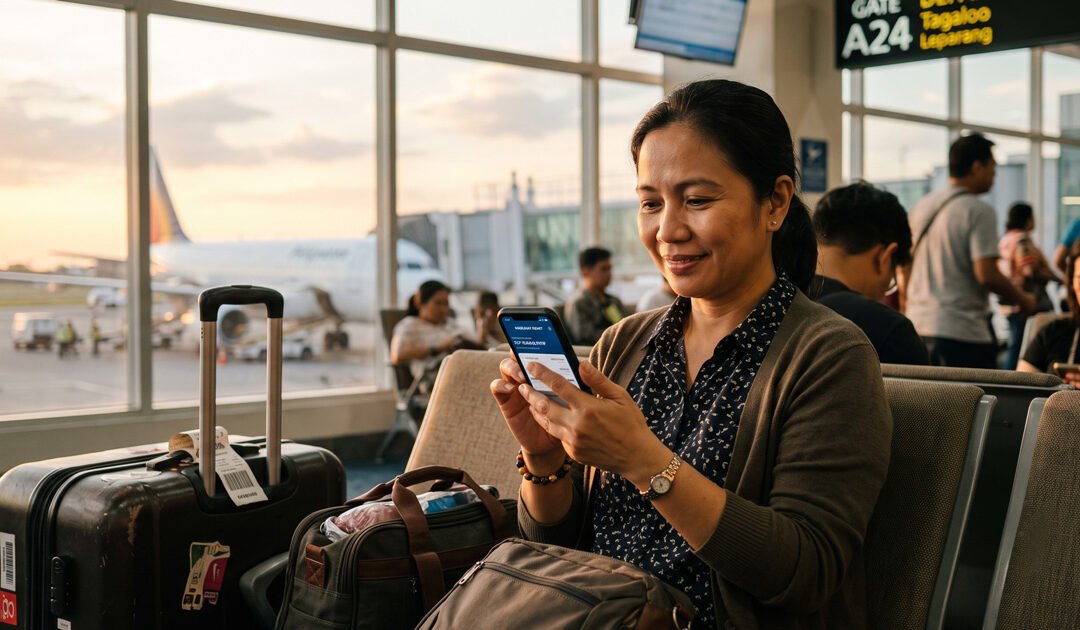
OFWs sent home a record $35.63 billion in cash remittances in 2025, according to the Bangko Sentral ng Pilipinas. That's 7.3% of the entire Philippine economy. And yet, ask around and you'll hear the same story on repeat: the OFW who worked abroad for decades and came home to an unfinished house and an empty bank account.
A UniTeller study found that 82% of remittance receivers have the final say on how the money gets spent, and 72% of families simply reach out to the OFW again when the cash runs out. A vicious cycle that ends up with the tragic case of "walang napala ang pinaghirapan."
So, let's talk about the part nobody covers in the pre-departure orientation seminar: how to turn those remittances into income streams that keep paying you even after you've hung up the uniform. I've ranked six options that OFWs actually use, from "set it and forget it" to "you will need a trustworthy human on the ground, good luck with that."
For every option, let's flag three things: the risk, the money and effort required, and whether you need to be physically in the Philippines to make it work. That last one matters more than people admit.
Disclaimer: This post is for general information only and is not financial or legal advice. Rates, yields, and rules change; verify with the institutions directly, and consult a lawyer for SPAs and property matters.
First, the math of one remittance
Let's set a working number. Say you can carve out $200 a month from your remittance for wealth-building, on top of what the family actually needs. At around ₱58 to the dollar (and the peso has been flirting with record lows lately), that's ₱11,600 a month.
That's not life-changing money but that can already be the start of something. Watch what it can do when you spend it on the right things instead of funding unnecessary wants by folks at home.
1. Pag-IBIG MP2 savings: the boring one that works
Risk: Very low | Capital: ₱500 minimum per remittance | Effort: Almost zero | Physical presence: Not required
If you only do one thing on this list, do this one. MP2 is Pag-IBIG's voluntary savings program with a 5-year lock-in, government-backed, and completely tax-free. The 2025 dividend rate came in at 7.12%, and it has stayed above 7% for four straight years.
For context, since July 2025, regular bank interest gets hit with a 20% tax under the CMEPA law. MP2 dividends don't. A 7.12% tax-free return beats a time deposit advertising 6% gross, no contest.
Our ₱11,600 monthly set-aside, faithfully deposited into MP2 for 5 years at the current rate, comes out to roughly ₱831,000 at maturity on ₱696,000 of contributions. That's about ₱135,000 in earnings, all yours.
You can enroll and deposit entirely online through Virtual Pag-IBIG, and OFW repatriation is one of the valid grounds for early withdrawal if life happens. No relatives involved, no one to "manage" anything. The money literally cannot be borrowed by your cousin.
2. Digital bank deposits: your peso parking lot
Risk: Very low (PDIC-insured up to ₱1 million per bank) | Capital: Any amount | Effort: Almost zero | Physical presence: Not required
BSP-licensed digital banks like Maya, Tonik, GoTyme, and MariBank pay somewhere in the range of 3% to 4% on regular savings, with time deposits reaching around 5.5% on 12-month terms. Interest is credited daily on most of them, and everything happens in an app.
Park ₱300,000 in a 12-month time deposit at 5.5% and you get ₱16,500 gross, or about ₱13,200 after the 20% withholding tax. Modest, yes. But this is where your emergency fund and short-term goals should live, not under the care of whoever holds the family passbook.
Deposits are insured by the PDIC up to ₱1 million per depositor per bank. Spread larger amounts across two or three banks and you're covered.
One warning: rates move. Several digital banks trimmed their rates in early 2026, so treat any advertised number as "current promo" rather than gospel.
3. REITs and dividend stocks: rent income without the tenant drama
Risk: Moderate (prices swing) | Capital: ₱5,000 to start | Effort: Low | Physical presence: Not required
Real Estate Investment Trusts let you own a slice of income-generating buildings (offices, malls, warehouses) through the stock exchange. By law under RA 9856, REITs must distribute at least 90% of their income as dividends, which is why yields commonly land in the 5% to 7% range, with some higher-risk names paying more.
Put ₱200,000 into a REIT yielding 6.5% and you're looking at ₱13,000 a year gross, or ₱11,700 after the 10% dividend withholding tax, paid out quarterly straight to your broker account. You can open an account with an online broker like COL Financial or a bank-backed platform entirely from abroad, though some brokers require notarized forms or authenticated documents for overseas applicants.
The catch: share prices move. Philippine REITs dropped 30% to 50% during the 2022 to 2023 rate hike cycle before recovering. If seeing red numbers on an app will make you panic-sell, size your position accordingly. And resist the temptation to just buy whatever has the highest yield; an unusually fat yield is usually the market telling you something is wrong with the underlying property.
4. Rental property: the classic OFW dream, with fine print
Risk: Moderate to high | Capital: ₱2 million and up | Effort: Moderate, ongoing | Physical presence: Partially required (or a representative with an SPA)
Every OFW has been pitched a condo at some point. Here's the honest math.
Metro Manila gross rental yields average around 5.1% to 5.8% depending on the quarter and the source. Sounds decent, until you subtract reality. Take a ₱4.5 million studio renting at ₱22,000 a month. That's 5.9% gross. Now deduct one month of vacancy, ₱42,000 in annual condo dues, ₱15,000 in repairs, real property tax, insurance, and a property manager's 10% cut, and you're down to roughly ₱147,000 a year, or a 3.3% net yield.
Suddenly MP2 doesn't look so boring, right?
That said, property gives you something the paper assets don't: a hard asset, potential appreciation, and a place to live when you come home.
Just go in alert and prepared. Metro Manila currently has an oversupply of around 30,000 unsold condo units, which means buyers hold the negotiating power and rents will likely stay flat through 2026. Studios and 1-bedroom units rent out faster than large units.
On physical presence: you can buy, sell, and manage property from abroad through a Special Power of Attorney (more on this weapon later), but somebody still has to show the unit, chase the rent, and deal with a leaky faucet. That somebody is either a licensed property manager you pay, or a relative you hope stays honest. Choose carefully.
5. Franchise or small retail business: where remittances go to die (unless you do it right)
Risk: High | Capital: ₱300,000 to ₱1 million+ | Effort: High | Physical presence: Effectively required (you or a real operator)
The food cart. The water refilling station. The sari-sari store extension. These are the most common OFW businesses, and, anecdotally, the most common casualty.
The math is unforgiving. A ₱500,000 food cart franchise needs to move about ₱2,500 a day at a 30% margin just to generate ₱22,500 a month in gross profit, before rent, wages, spoilage, and the barangay's assorted fees. Miss the foot traffic estimate by half and the business is paying its staff more than it pays you.
Now add the OFW twist: you're continents away, and the person running it is your snotty relative. Sales are whatever he says they are. Inventory is whatever's left. This is not a business; this is a very slow donation.
If you must (and I get the appeal, a business is something you can point at), do it like a business: registered with the DTI or SEC, a real POS system or at minimum a digital payment trail through GCash or Maya so sales are visible from your phone, CCTV you can check remotely, and an operator who is paid a proper salary plus incentive, with a written agreement, even if she shares your surname. Especially if he shares your surname.

6. Transport and vehicle-for-hire: high touch, high trust
Risk: High | Capital: ₱150,000 (tricycle) to ₱1.5 million+ (car for TNVS) | Effort: High | Physical presence: Effectively required
The tricycle, the habal-habal, the car enrolled in a ride-hailing service with a hired driver. The appeal is daily cash flow: a "boundary" arrangement where the driver remits a fixed amount per day.
The problem is that your asset depreciates every single day, gets driven by someone whose incentive is to maximize trips rather than maintain your engine, and generates income that only exists if it's actually remitted to you. Repairs are frequent, franchising rules for tricycles run through the LGU, and TNVS accreditation runs through the LTFRB with its own compliance costs.
Of the six, this is the stream most dependent on the honesty of one specific person. It can work, plenty of families run it well, but it should be the last thing you fund, not the first.
The ranking at a glance
| Rank | Income stream | Risk | Capital to start | Effort | Need to be in PH? |
|---|---|---|---|---|---|
| 1 | Pag-IBIG MP2 | Very low | ₱500 | Minimal | No |
| 2 | Digital bank deposits | Very low | Any amount | Minimal | No |
| 3 | REITs and dividend stocks | Moderate | ₱5,000 | Low | No |
| 4 | Rental property | Moderate to high | ₱2M+ | Moderate | Partly (SPA + manager) |
| 5 | Franchise / retail business | High | ₱300K+ | High | Yes, or a real operator |
| 6 | Transport / vehicle-for-hire | High | ₱150K+ | High | Yes, or a trusted driver |
Notice the pattern? The streams that require nobody's honesty but your own sit at the top. That's not an accident.
The elephant in the remittance: kahit pamilya, hindi puwedeng basta pagkatiwalaan
Let's say the quiet part out loud. The biggest risk to an OFW's wealth is not inflation, not the stock market, not even the weak peso. It's handing money to people, including family, with zero structure around it.
This is uncomfortable because our culture treats financial controls within the family as an insult. Asking your brother for receipts feels like accusing him of theft. So OFWs skip the paperwork, and a PIDS study politely calls the aftermath "family fragmentation." The barangay captain calls it "away ng magkakapatid tungkol sa pera."
Here's the reframe: structure is not distrust. Structure is what lets you keep trusting people, because nobody is ever put in a position where quiet borrowing is easy and invisible. Banks require documents from their own executives. You can require them from your own siblings.
[IMAGE HERE - see Image Prompt 4]
How to protect yourself: legal and practical armor
Use a Special Power of Attorney, and make it specific. An SPA lets someone transact on your behalf: sign a deed of sale, receive rent, process papers. Since the Philippines joined the Apostille Convention in May 2019, you no longer need the old red ribbon; an SPA signed abroad just needs notarization plus an apostille from the host country's competent authority (or notarization at the Philippine Embassy or Consulate for non-apostille countries). Two rules: enumerate the exact powers granted, because a vague "manage my affairs" SPA is an invitation to creative interpretation; and remember you can revoke it anytime with a written revocation served on the agent and any third parties. A general power of attorney handing over everything? Huwag. Never.
Keep titles and registrations in your name. Land title, condo CCT, vehicle OR/CR, business name registration: yours. It is far too common for OFWs to fund a property that ends up titled to a sibling "for convenience," which converts your investment into a gift the moment relationships sour. If a relative must transact for you, that's what the SPA is for. Ownership never has to move.
Put every family money arrangement in writing. If your brother operates your business, he's an employee or a profit-sharing partner, and there's a one-page notarized agreement saying which. If your parents live in your house, wonderful, and the title still says your name. A notarized document costs a few hundred pesos. A partition dispute costs years and the family itself.
Build visibility you don't have to ask for. Separate bank account per venture, online banking access from abroad, digital payments (GCash, Maya, bank QR) instead of cash wherever possible, CCTV for physical businesses, and a simple monthly report even if it's just photos of the notebook. The goal is that you never have to ask "saan napunta ang pera?" because you can already see.
Pay professionals where the stakes are high. A licensed property manager takes 8% to 12% of rent and in exchange screens tenants, collects, and documents everything. A bookkeeper for a small business costs a few thousand pesos a month. Yes, these fees hurt. They hurt less than a hollowed-out business you discover during your once-a-year vacation.
Insure the hard assets. Fire insurance for the property, comprehensive insurance for the vehicle. Non-negotiable for assets you can't physically watch.
The bottom line
Start from the top of the list and work down. Max out the streams that need no middleman (MP2, deposits, REITs) before you fund anything that depends on someone else's honesty and effort. If and when you do go into property or business, bring paperwork, visibility, and professional help, and treat those costs as part of the capital, not an optional extra.
You already did the hardest part: earning the money in a country that isn't yours. The least the money can do is keep working after you stop.