
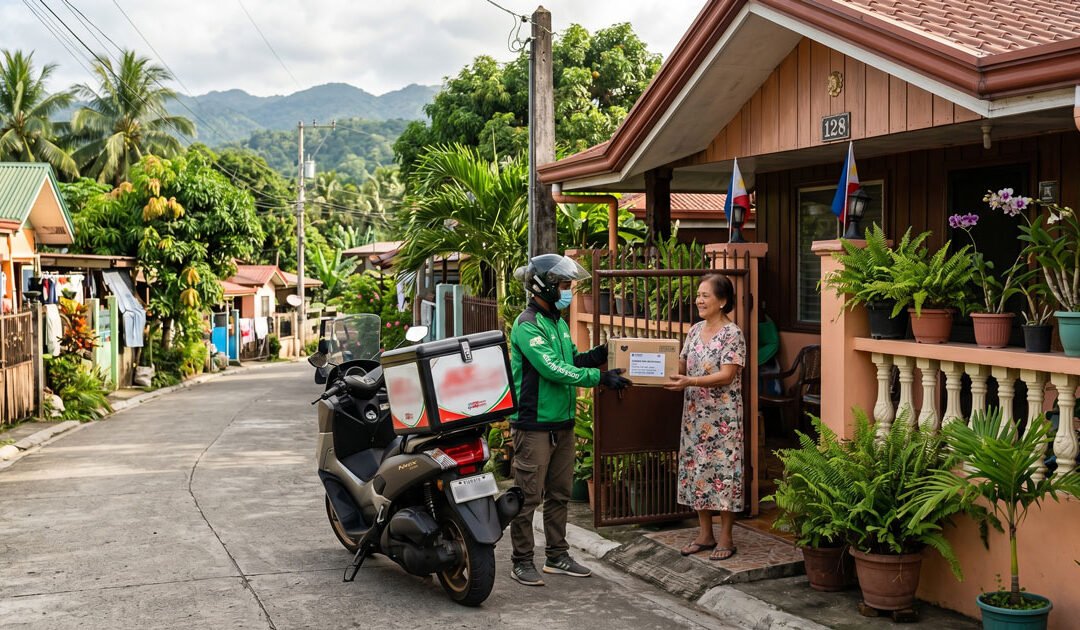
Who here has items in their cart in either Shopee or Lazada? Both? Sounds familiar? The members of Philippine online shopping culture are legion. The budol is real.
Online shopping in the Philippines is not a side hobby anymore. It is practically a national pastime. It’s so common to hear the kaching of the Shopee app in public. And I’ve seen some people actually panic since their courier has arrived for the COD purchase and they’re not at home.
And yet for all its hassles (especially if you’re one of those who can’t afford to splurge), we constantly tell ourselves the magic words that turn a wasteful purchase into a perfectly reasonable one – “deserve ko ‘to.” Compound that with the urge to flex to show you’re making it (lifestyle creep).
The question this post wants to poke at is simple but a little uncomfortable. When you tap “Check Out,” are you spending on yourself, or are you actually investing in yourself? Because those are two very different things, and the apps are designed so that you can barely tell them apart.
We are shopping like there’s no tomorrow
Let me throw some numbers at you, because they are genuinely wild.
Combined sales across Shopee, Lazada, and TikTok Shop hit around USD 22 billion in 2025, based on Cube’s data, up 15 percent in a single year. The average Filipino on Shopee placed about 11 orders over the year. Eleven. That is almost one cart a month, every month, like clockwork.
And the average order is not even that big. Shopee’s average basket sits around ₱316, while TikTok Shop’s hovers near ₱198 – which tells you a lot. These are not big, deliberated purchases. These are small, frequent, easy-to-justify taps. Budol by a thousand cuts.
The infrastructure around us is built to make this frictionless. There is the 9.9, 11.11, and 12.12 machinery that conveniently lands right when sahod arrives. There is “budol” culture, now so normal that Dentsu literally tracks it as a consumer behavior. And there is the quiet little button at checkout that changed everything: buy now, pay later. The Philippine BNPL market is projected at around USD 3.21 billion for 2025. We are not just buying more. We are buying things we cannot fully pay for yet.
I am not here to clutch my pearls about it. I shop online too (remember the lamp). But let’s be honest about the math before we talk about the mindset.
The “deserve ko ‘to” trap
There is a real reason this hits so hard for Filipinos specifically.
A 2024 study of Metro Manila Gen Z by The Fourth Wall, cited here, found that self-rewarding spending is tied to a need for affirmation – buying something to prove to yourself that the stress, the OT, the commute from Antipolo to BGC was all worth it. “Deserve ko ‘to” is not laziness. It is exhaustion wearing a nice outfit.
And the apps know this. Notice that the big sales never happen mid-month when your wallet is thin. They happen on the 15th and the 30th. They intercept your sahod at the exact moment you feel both flush and depleted. That is not a coincidence. That is product design.
Pair that with BNPL and you get a genuinely risky combo. A 2025 academic study of BNPL users in Iloilo City found that these consumers show “frequent purchasing behavior” and “a high tendency for unplanned spending,” while underestimating the financial risk they are taking on. Translation: the easier it is to split into “tatlong gives,” the easier it is to forget you are actually borrowing money.
So no, the urge is not a character flaw. It is engineered. But knowing that is exactly what gives you the power to interrupt it.
The sale price too good?
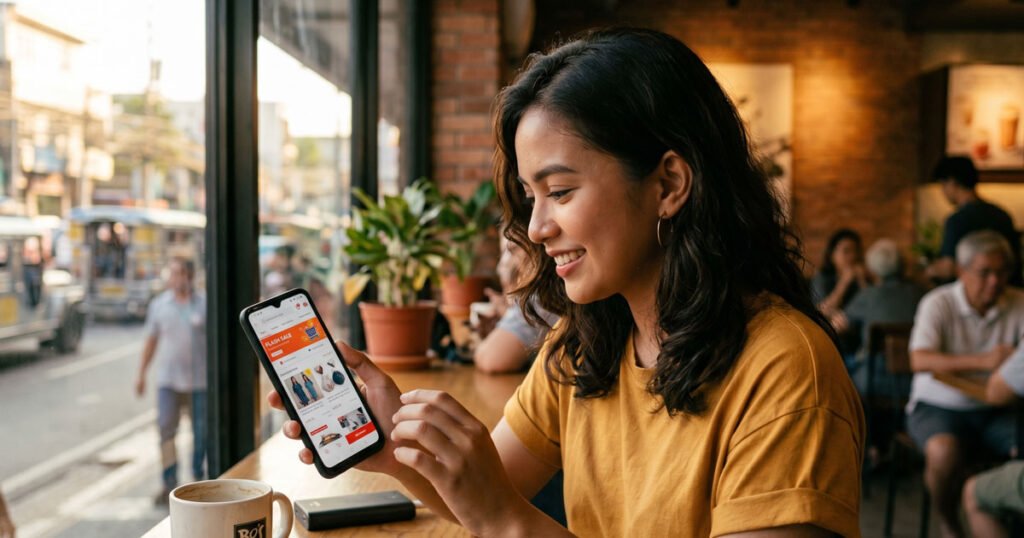
Another thing that makes online shopping so addicting is the discount. Some online sellers can offer lower prices since they don’t have the overhead that most brick and mortar places have. And, on top of that, platform and store vouchers and coins can be stacked to get even bigger discounts. It isn’t uncommon to get as much as 40% off from brick and mortar SRP on some items.
However, routinely buying things just because they are on sale is rarely a sound financial move. This habit triggers a psychological trap known as anchoring. When you see a high original price marked down, your brain evaluates the purchase based on the “money saved” rather than the “money spent”.
Online platforms know how to play this psychology. They offer gamified elements like countdown timers, limited-stock banners, and minimum-spend thresholds create artificial urgency and FOMO (Fear of Missing Out). This urges you to add filler items to your cart just to qualify for a stacked voucher.
Mechanically, you aren’t saving 50%. You are spending 100% on an item you never intended to buy. True frugality lies in purchasing only what you actually need, regardless of how enticingly stacked the discounts look. So, unless you really need the item, consider skipping buying it even if it looks like a steal.
The honest test: is this spending or investing?
Here is where I want to draw a line that I think actually matters.
Not all online shopping is bad. That framing is lazy and, frankly, joyless. The real distinction is not “shopping bad, saving good.” It is whether a purchase gives you something back or just gives you a high.
Spending evaporates. The dopamine from unboxing lasts about as long as the LBC rider takes to drive away. Investing in yourself compounds. It keeps paying you – in skill, in health, in time saved, in money earned – long after the novelty wears off.
The tricky part is that the same product can be either, depending entirely on you. A ₱1,500 mechanical keyboard is pure spending if it is your fourth one. It is an investment if you are a writer or coder who stares at a keyboard ten hours a day and the right one saves your wrists. A course is an investment only if you finish it. (We all have that one ₱999 Udemy course we bought during a 12.12 sale and never opened. No judgment. Mostly.)
So before you check out, run the purchase through four quick questions:
- Will I still use this in six months? Not “could I,” but “will I, realistically.” Be honest about past-you’s track record.
- Does it save me time, money, health, or earn me something? If yes, it is leaning toward investment. If the only answer is “it makes me happy for an afternoon,” that is spending. (Which is fine, in moderation – more on that below.)
- Am I buying this because I planned to, or because the app suggested it at 11 PM? Planned purchases are almost always healthier than ambushed ones.
- If I had to pay full price, in cash, today, would I still want it? BNPL and discounts are designed to make this question disappear. Bring it back.
If a purchase survives all four, buy it with a clear conscience. If it fails even one, sleep on it. The cart will still be there tomorrow. Trust me, the lamp survived.
A little peso math (because of course)
Let me show you why the small stuff matters, since it is the small stuff that gets us.
Say your “deserve ko ‘to” habit runs about ₱2,000 a month. Not crazy. Two or three modest carts. That is ₱24,000 a year quietly leaving your account in ₱316 increments.
Now imagine you redirected just that – not your fun money, not your whole budget, just the impulse portion – into Pag-IBIG MP2, which declared a 7.12 percent dividend for 2025. Keep it up for five years at that rate and you would have put in ₱120,000 and ended up with roughly ₱144,500. That is about ₱24,500 in earnings – basically a free year of impulse shopping handed back to you, and tax-free on top of it.
That last detail matters more now. Since July 2025, regular bank interest is generally taxed 20 percent, so a “6 percent” time deposit really nets you closer to 4.8 percent. MP2 dividends are not taxed that way, which is part of why people keep talking about it.
Now, I am not telling you to dump your entire shopping budget into MP2 and live like a hermit. That is unrealistic and a little miserable. The point is narrower: the money that disappears into stuff you do not remember buying is the exact money that could be working for you instead. Same pesos. Wildly different futures.
What “investing in yourself” actually looks like
Okay, so if mindless carts are the spending side, what is the investing-in-yourself side? Because “invest in yourself” has become such a hollow LinkedIn phrase that it means nothing anymore.
Here is what it actually looks like, in real peso terms, often bought on the very same platforms:
- Skills that raise your earning power. A legit certification, a language app subscription you actually use, the software your freelance gig requires. The test is whether it shows up on your resume or your invoices later.
- Health, the boring kind. Decent shoes if you are finally walking. A water filter. A blood pressure monitor for your tatay. Healthcare in this country is brutal and getting more expensive every year, so prevention is one of the highest-return purchases you can make.
- Tools that pay for themselves. A reliable laptop if you work on one. A rice cooker that ends your daily ₱150 food-panda habit. A good office chair if your lower back has opinions.
- Time. Sometimes the appliance that saves you four hours a week genuinely is an investment, because your time has value too.
Notice none of these are anti-shopping. You can buy every one of them on Shopee at 11 PM. The difference is entirely in the why, not the where.
But first, the non-negotiables
Before you reframe a single purchase as “investing in myself,” please park this in your head: investing in yourself does not start at the checkout page. It starts well before it.
If you do not have an emergency fund of at least three to six months of expenses, that comes first. If you are carrying BNPL or credit balances that roll over, clearing those is the highest-guaranteed-return “investment” available to you, full stop. No course, no gadget, no MP2 beats killing high-cost debt.
And the BNPL caution is not me being matakot. The data backs it. The same Iloilo study found users consistently underestimate the debt they are accumulating. A simple rule that has saved me more than once: never split anything into installments that you could not pay in full today. If the cash is not there now, the installment is just future stress with a discount sticker on it.
There is one quietly hopeful sign worth ending on, though. The BSP’s late-2025 Consumer Expectations Survey showed Filipino borrowing actually falling and more households planning to save. We are not doomed shopaholics. We are just up against an industry that is very, very good at its job. Knowing that is half the battle.
So next time the cart calls at 11 PM, do not feel guilty. Just ask the four questions and get a moment of clarity.